
Appearance alone cannot reliably determine mold species.
Believe it or not, mold can indeed thrive in underwater environments. In fact, a staggering 21,000 to 645,000 mold spores per cubic meter have been detected in indoor air following flooding events. This shows the alarming potential for mold growth in submerged conditions.
These aquatic fungi, known as water molds or aquatic molds, belong to the order Saprolegniales. They are commonly found in various water bodies, including aquariums, ponds, and even swimming pools. They feed on organic matter, often appearing as white, fuzzy, or slimy growths. These growths can quickly escalate into full-fledged colonies.
Key Takeaways
- Mold can indeed grow underwater, particularly in the form of water molds or aquatic fungi.
- These organisms thrive in aquatic environments, feeding on organic matter and forming white, fuzzy, or slimy growths.
- Mold spore concentrations can skyrocket in flooded areas, indicating the significant risk of underwater mold growth.
- Aquatic molds are resilient to chlorine and bromine, making them a persistent problem in pools and aquariums.
- Understanding the characteristics and causes of underwater mold is crucial for effectively preventing and treating this issue.
Understanding Underwater Mold: Types and Characteristics
The underwater world is full of life, and mold can grow there too. Water molds, or oomycetes, are like fungi that live in water. They can be found in lakes, rivers, and even aquariums.
Common Species of Water Mold
Some well-known water molds include:
- Achlya: These molds grow on decaying matter in water and look like cotton.
- Leptolegnia: Found in soil and water, they have long, thin structures.
- Saprolegnia: These molds have fluffy growths that can harm fish and eggs.
Physical Characteristics and Appearance
Water molds look different based on their species and where they grow. They can be white, fuzzy, or cotton-like. Sometimes, they might look slimy or gelatinous.
Growth Patterns in Aquatic Environments
Water molds love to grow on organic matter, especially carbs. They grow fast in places with lots of nutrients. Their growth can change based on water movement, pH, and temperature.
“Mold can begin to grow in just 24-hours after a water breach, and can thrive in moist, dark, and warm areas long after the breach is stopped.”
Can Mold Grow Underwater: The Scientific Truth
Mold can grow underwater, contrary to what many think. These organisms, called water molds or aquatic fungi, don’t belong to the true fungi kingdom. They are filamentous and live on organic matter in water.
Water molds need a steady food source, like decaying plants or animal waste. They also need enough moisture and the right temperature to grow. These conditions are common in water environments.
In extreme places like the International Space Station, mold can still grow. This shows how adaptable and strong these fungi are.
Underwater mold can grow fast, sometimes overnight. It can look like algae or other growths. Their ability to spread quickly makes them hard to control in water settings.
“Mold can grow on even the most unlikely surfaces, including plastic, as long as the necessary conditions are present.”
Even though mold is hard to break down plastic, some additives in plastic can feed it. These additives include plasticizers and colorants. This lets mold grow on plastic in moist, organic-rich environments.
For any packaged cleaner or mold-control product, follow the manufacturer's current product label and safety instructions. Product choice does not replace correcting the moisture source or evaluating affected materials.
The Impact of Water Molds on Aquarium Ecosystems
Water molds themselves are usually safe for fish. But, they can show problems in the aquarium that might harm the whole ecosystem. These organisms can affect fish and plants and also change the water quality, which needs careful watching.
Water Quality Concerns
Water molds can mean there are a lot of organic compounds in the water. These compounds can help harmful bacteria grow, which can make the water worse for fish. Keeping the water quality right is key to avoiding water mold problems.
Role in Biological Filtration
Water molds can also help with the aquarium’s biological filtration. They can eat up extra organic matter, which can help the ecosystem. But, it’s important to keep a balance so the benefits don’t get lost.
| Water Mold Effects | Impact on Aquarium Ecosystem |
|---|---|
| Water Quality | Molds can indicate high levels of organic compounds, supporting harmful bacterial growth |
| Biological Filtration | Water molds can consume excess organic matter, potentially contributing to the ecosystem’s balance |
Common Causes of Underwater Mold Growth
Underwater mold often grows because of too much organic matter in the water. This can be from uneaten fish food, decaying plants, certain woods, almond leaves, and some aquarium products or tap water. Poor water flow, bad filtration, and overfeeding can make things worse.
Mold loves still water with little movement and food. Places like pools, water bottles, and wells are perfect for mold. But, mold in water lines is rare because water moves and there’s no food.
Water bottles can be mold havens because they’re moist and full of food. Pools also have mold because of moisture and food, but sunlight and cleaning help control it.
| Excess organic matter | Stagnant water | Black mold | Sinus issues |
| Inadequate filtration | Swimming pools | Aspergillus | Headaches |
| Overfeeding | Bathrooms | Cladosporium | Depression |
Different Forms of Underwater Mold
Distinguishing Mold from Other Growth
It’s hard to tell if it’s mold in your aquarium, as it might look like algae or bacteria. But, there are some differences:
- Water mold grows fast, showing up in days, not weeks or months.
- Its white fuzz or slime feels cotton-like or gelatinous, unlike algae’s firm texture.
- Water mold often grows on surfaces like ornaments, pipes, and substrate. Algae usually sticks to glass or plants.
Knowing what growth is in your aquarium is crucial for treating it right. Talking to an expert or doing more research can help you figure it out.
Prevention Strategies for Underwater Mold
- Water Quality Management: Changing the water often helps by diluting mold food. Make sure your filters work well to keep water clean and full of oxygen.
- Proper Aeration and Water Movement: Good water flow and surface movement stop mold. Use devices like powerheads or air stones to keep water moving.
- Balanced Feeding Practices: Don’t overfeed your fish. Leftover food and waste can lead to mold growth.
- Established Biological Filtration: A mature biofilter eats organic matter before mold can. This makes your aquarium less welcoming to mold.
| Prevention Technique | Benefits |
|---|---|
| Regular Water Changes | Dilutes and removes organic compounds that feed mold growth |
| Efficient Filtration | Keeps the water clean and well-oxygenated, discouraging mold |
| Proper Aeration and Water Movement | Prevents stagnant pockets where mold can establish itself |
| Balanced Feeding Practices | Reduces the buildup of organic matter that fuels mold development |
| Established Biological Filtration | Consumes organic compounds before mold can use them as a food source |
Professional Treatment Options and Solutions
Chemical Treatments
Natural Remedies
When to Call Experts (612) 477-0804)
If mold keeps coming back, call the pros. They offer free mold inspections and find the cause. Their team has the tools and knowledge to fix your aquarium.
- Consistent Water Changes: Change some water often to keep it clean. This helps prevent mold.
- Proper Feeding Practices: Don’t overfeed your fish. Uneaten food can rot and attract mold.
- Adequate Filtration: Make sure your filter works well. It should remove waste and keep the water clean.
- Optimized Water Circulation: Good water flow stops mold from growing in one spot.
- Timely Removal of Organic Matter: Get rid of rotting plants and uneaten food fast. This stops mold from getting food.
Using these tips, you can keep your aquarium clean. This makes it a better place for your fish to live.
| Aquarium Maintenance Tip | Benefit |
|---|---|
| Perform Regular Water Changes | Dilutes organic buildup and waste, reducing nutrient sources for mold |
| Practice Proper Feeding | Prevents decomposing food from providing a food source for mold |
| Maintain Effective Filtration | Removes waste and debris, keeping the water quality high |
| Ensure Adequate Water Circulation | Prevents stagnant areas where mold can thrive |
| Promptly Remove Organic Matter | Eliminates potential food sources for mold growth |
By following these tips for aquarium maintenance, mold prevention, and water quality management, you can make a great home for your fish. They will love living in a clean, mold-free aquarium.
Expert Tips for Long-Term Mold Control
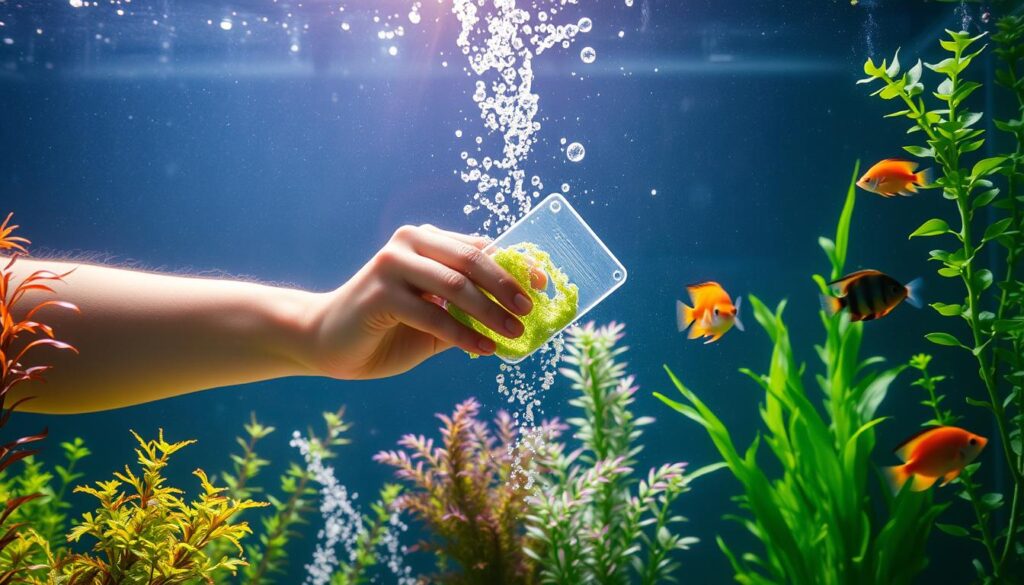
Start by using top-notch, protein-rich fish food. This helps avoid too much organic matter in the water, which can cause mold. Also, a strong and working biofilter is crucial. It keeps the water quality good and stops mold from growing.
If you see mold, act fast. Check the water often and watch the chemical levels. This includes pH, ammonia, nitrites, and nitrates. It helps find and fix any problems that might lead to mold.
| Tip | Description |
|---|---|
| Use High-Protein Fish Food | Avoid excess organic matter that can fuel mold growth. |
| Maintain Effective Biofilters | Well-functioning biological filtration is crucial for water quality and mold prevention. |
| Monitor Water Parameters | Regularly test and maintain proper pH, ammonia, nitrites, and nitrates to create an unfavorable environment for mold. |
“Proactive measures and consistent aquarium management are the keys to preventing and eliminating mold growth in the long run.” – Aquarium Mold Specialist
Conclusion
If mold keeps coming back, get help from experts. They do free checks and find ways to stop mold for good. Their help keeps your fish safe and your tank clean.
FAQ
Can mold really grow underwater?
Yes, mold can grow underwater. It shows up as water molds or aquatic fungi. These thrive in water and look like white fuzz, slime, or cotton.
What types of water molds are common?
You’ll often see Achlya, Leptolegnia, and Saprolegnia water molds. They look like white fuzz, slime, or cotton and eat organic matter in the water.
How do underwater molds differ from true fungi?
Water molds are not true fungi but belong to Chromista. They are filamentous and grow underwater, eating organic matter.
What are the effects of underwater mold on aquarium ecosystems?
Water molds can mean there’s a lot of organic compounds in the water. This can lead to harmful bacteria and affect fish and plants. But, they also help by eating excess organic matter.
What causes underwater mold growth?
Mold grows from too much organic matter in the water. This includes uneaten food, decaying plants, and certain materials. Poor water flow, bad filtration, and overfeeding also contribute.
How can I identify underwater mold?
Mold looks like white fuzz, slime, tufts, or cotton on aquarium surfaces. It grows fast, appearing in days, not weeks or months.
How can I prevent and control underwater mold?
To stop mold, keep the water clean and reduce organic matter. Change the water often, use good filtration, and don’t overfeed. A well-established biofilter helps too.
What treatment options are available for underwater mold?
Source Links
- White Water Mold: How To Get Rid Of White Mold | Pool Marvel
- Airborne Mold and Endotoxin Concentrations in New Orleans, Louisiana, after Flooding, October through November 2005
- What Is White Mold and Is It Dangerous? – PuroClean HQ
- Can Mold Grow on Plastic?
- Human Body Decomposition In Water | Aftermath
- The impact of the water moulds Saprolegnia diclina and Saprolegnia parasitica on natural ecosystems and the aquaculture industry
- Temperature and Water Molds Influence Mortality of Lithobates catesbeianus Eggs
- Aquatic Fungi And Fish Production In Egypt, II – In Vivo Studies
- Mold in Water – Can Mold Grow in Water Sources?
- Can Mold Grow In Water | Diamondback Plumbing
- 16.10.1. Aquarium White Fuzz
- White slime/fungus on new drift wood?
- Reduce Your Risk of Mold After a Flood
- How to Prevent and Remove White Water Mould | 1st Direct Pools
- Mold remediation, mold abatement, mold restoration services for your home or business
- Say Goodbye to Mold with These Effective Treatment Techniques – Micro-Pak Distribution USA
- Banking After the Storm
- The 5 Best Tips for Preventing Mold and Mildew on Your Boat
- How To Test For Mold In Water + Water Mold Facts
- Expert Q&A on Mold Growth, Remediation Strategies, and Prevention Tips
- Mold Prevention and Removal: Expert Tips
- Handle The Water Damage Mold With Expert Tips
- Mold and Endotoxin Levels in the Aftermath of Hurricane Katrina: A Pilot Project of Homes in New Orleans Undergoing Renovation
- Mold Contamination & Mold Remediation