
Key Takeaways
- It’s best used on non-porous surfaces and small areas.
- For larger infestations, professional help is recommended.
- Book your mold assessment online today.
Understanding Vinegar’s Mold-Fighting Properties
Scientific Insights and Mold Behavior
Vinegar’s acidity, with a pH of approximately 2.5, creates an environment that disrupts mold growth. This acidity is strong enough to stop mold from spreading without harming most surfaces when used correctly. However, mold thrives in damp, enclosed spaces, so addressing moisture is crucial for long-term solutions.
Vinegar vs. Traditional Cleaners
Can I Use Vinegar to Kill Mold?
Effectiveness on Various Surfaces
Chemical Properties and Limitations
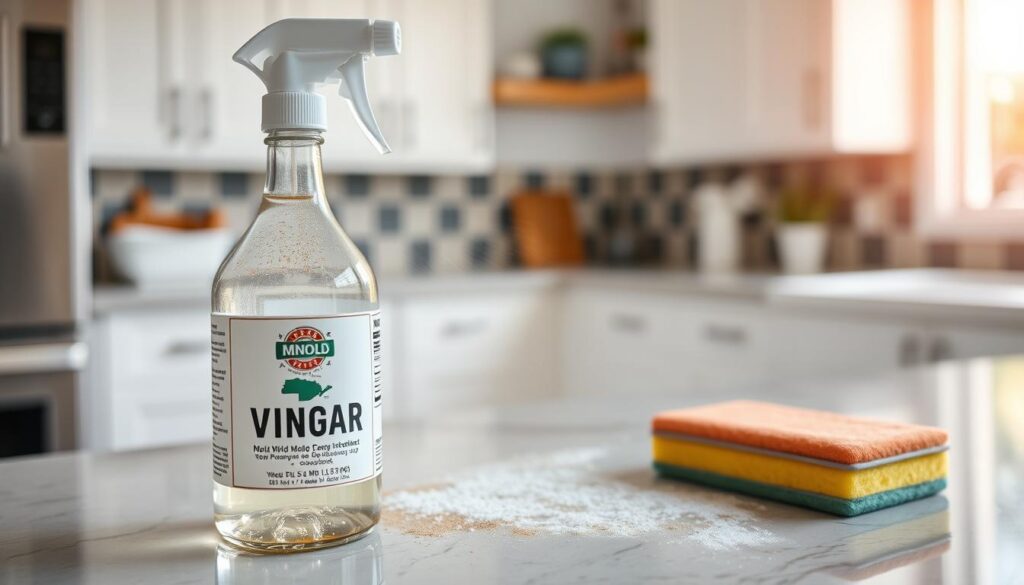
Vinegar’s mild acid strength is its key advantage. It creates an environment inhospitable to mold growth. However, this mildness also limits its ability to tackle deep-seated mold, which may require stronger solutions or professional intervention.
While vinegar can address surface mold, it’s crucial to act quickly to prevent deeper penetration. Regular application can help prevent mold growth, especially in damp areas. However, if the infestation covers more than 10 square feet, professional help is recommended, as advised by the EPA.
Step-by-Step Guide to Using Vinegar for Mold Removal
Gathering Supplies and Safety Gear
Before you start, make sure you have the right supplies:
- White vinegar (undiluted)
- Baking soda
- Protective gloves
- Mask
- Goggles
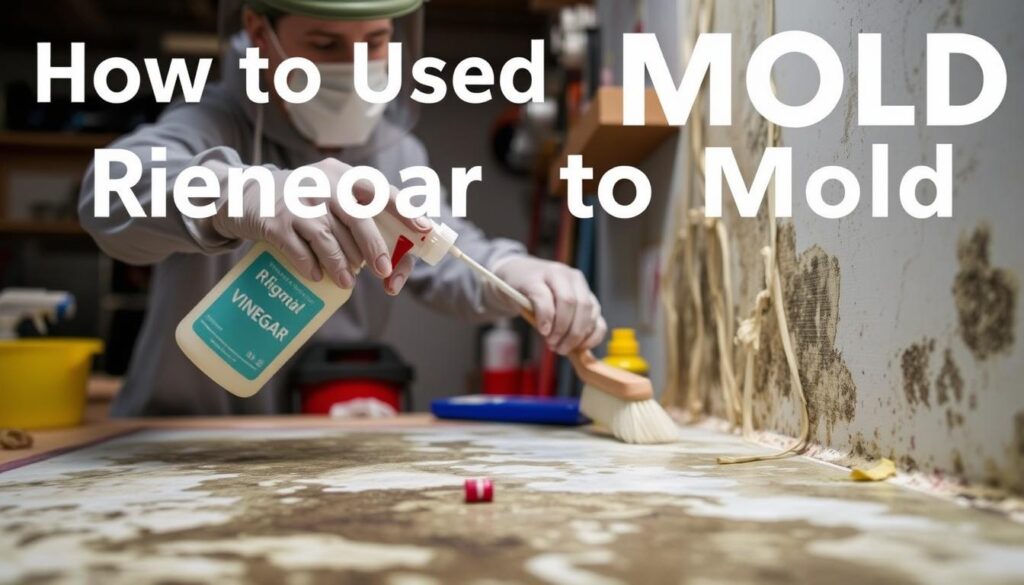
Protective gear is essential to avoid exposure to mold spores and vinegar fumes.
Application Process and Required Wait Times
Precautions and Best Practices for Effective Mold Removal
Surface Compatibility and Protective Measures
Recognizing When DIY Isn’t Enough
Exploring Alternative Mold Removal Methods and Professional Assistance
While vinegar is a popular choice for tackling mold, it’s not the only option. Exploring alternative methods can provide a more comprehensive approach to mold removal, especially when dealing with different surfaces or more severe infestations.
Home Remedies: Tea Tree Oil, Hydrogen Peroxide, and Baking Soda
Regular Cleaning, Moisture Control, and Ventilation
The Importance of Routine Inspections
Conclusion
FAQ
Is vinegar effective against all types of mold?
Can vinegar damage surfaces like stone or wood?
How long does it take for vinegar to kill mold?
Is vinegar a good alternative to bleach for mold removal?
Can I use vinegar to prevent mold from growing?
Yes, vinegar can help prevent mold growth when used regularly. Its acidity creates an environment that inhibits mold spores from developing. Regular cleaning with a vinegar solution, especially in damp areas, can reduce the risk of mold recurrence.
Do I need to wear protective gear when using vinegar to clean mold?
For high-risk areas like bathrooms and basements, clean with a vinegar solution at least once a week. Regular inspections and good ventilation can also help prevent mold growth.
Can vinegar remove mold from large areas, like entire walls?
Is there a difference between white vinegar and other types of vinegar for mold removal?
When should I consider hiring a professional mold removal service?
Source Links
- A Guide to Cleaning Mold with Vinegar – https://www.merrymaids.com/cleaning-tips/diy/a-guide-to-cleaning-mold-with-vinegar/