
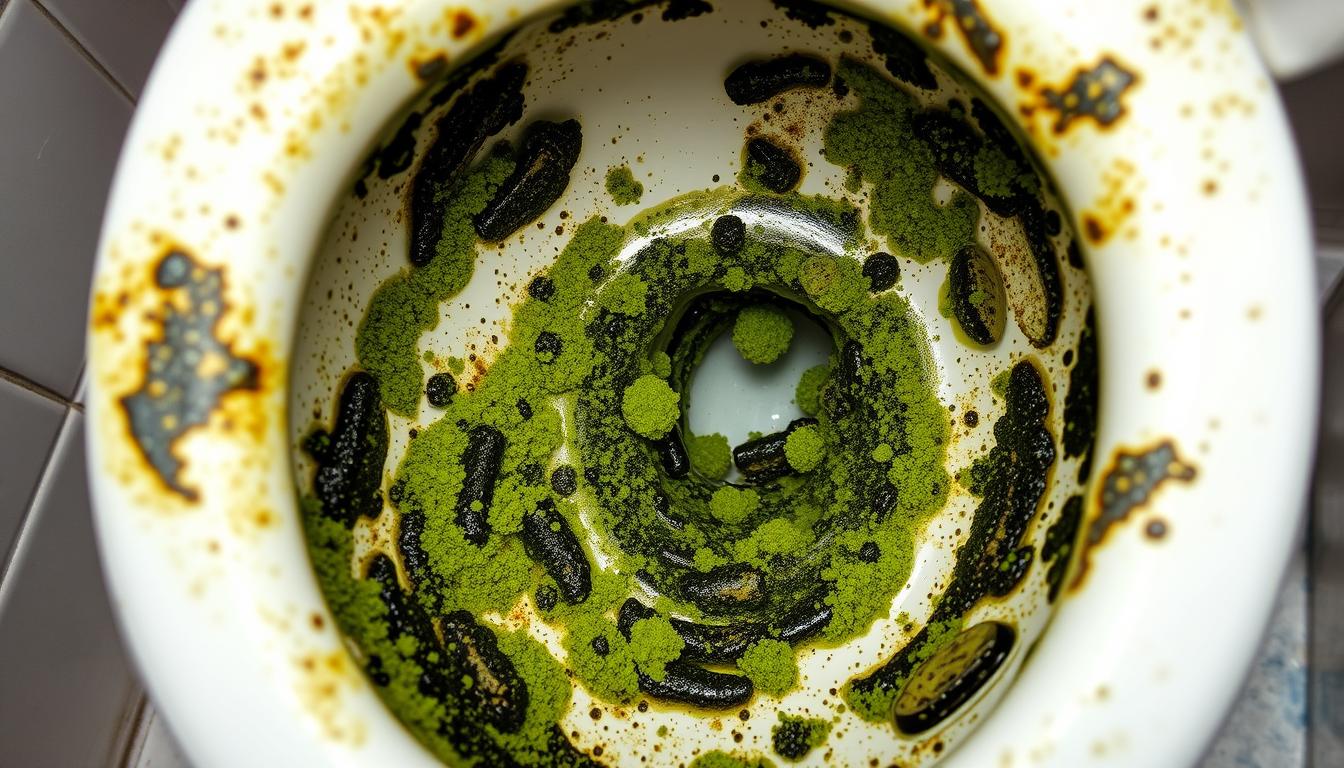
Appearance alone cannot reliably determine mold species.
Key Takeaways
- Mold loves moist, dark, and warm places like toilets because they are damp, have bad air flow, and are warm.
- Mold spores grow and spread in toilets when they meet moisture, often from leaks or not cleaning well.
- Cleaning toilets regularly and fixing leaks fast is important to stop mold.
- Good air flow and using a dehumidifier can help keep mold spores away.
Understanding Toilet Mold: What You Need to Know
Types of Mold Commonly Found in Toilets
The Science Behind Mold Growth
| Pink Mold | Slimy or powdery | Gastrointestinal issues, infections |
| Green Mold | Slimy or powdery | Headaches, fatigue, mood swings |
Why Is Mold Growing in My Toilet: Common Causes and Factors
Mold in toilets is a common problem. It often comes from stagnant water, which mold loves. High humidity and poor air flow in bathrooms also help mold grow.
Hard water deposits can also attract mold. Not cleaning the toilet well or often enough makes things worse. Even mold in the water supply can spread to the toilet bowl and tank.
- Stagnant water in the toilet bowl or tank
- High bathroom humidity and poor ventilation
- Hard water deposits and mineral buildup
- Inadequate or infrequent cleaning
- Mold in the water supply
Mold loves dark, damp places, and toilets are perfect for it. Flushing often and good air flow can help. But knowing why mold grows is key to stopping it.
Bathroom humidity helps mold grow in toilets. Not enough air flow, long hot showers, and moisture all help mold. Better air flow, exhaust fans, and quick cleaning of spills or leaks can help prevent mold.
Signs of Mold Infestation in Your Toilet Bowl
Identifying toilet mold requires watching for visual signs and unusual smells. Mold loves the moist, warm spots in bathrooms, making the toilet bowl a perfect place for it to grow.
Visual Indicators of Mold Growth
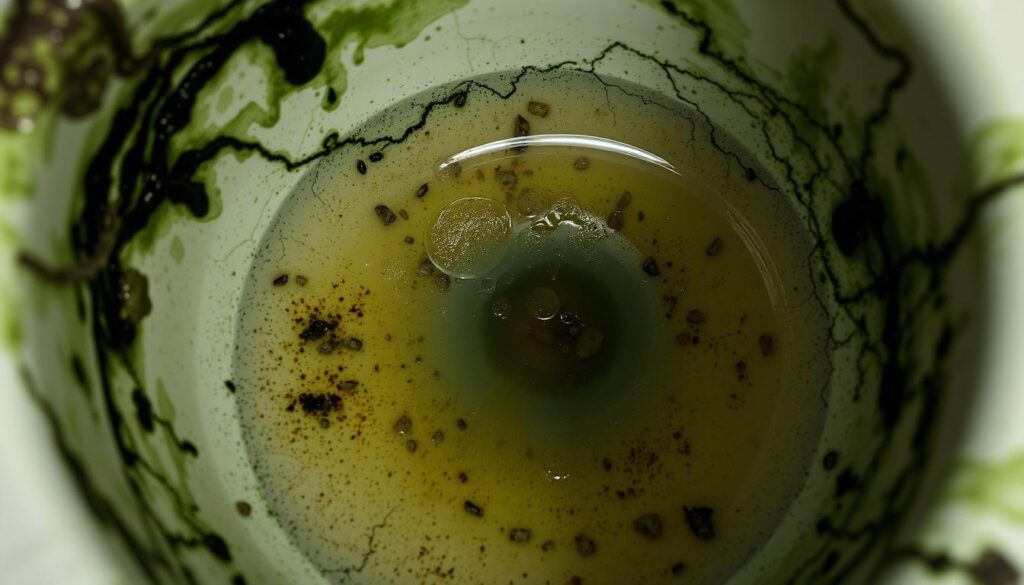
Look for colored patches like black, green, pink, red, or white on the toilet bowl or tank. These are clear signs of mold infestation. The mold might feel fuzzy or slimy, and you might see rings around the bowl or tank. These signs can help you spot bathroom mold early.
Unusual Odors and Warning Signs
The Hidden Dangers of Toilet Tank Mold
Cleaning regularly, using mold-resistant materials, and controlling humidity can help fight mold. But if you think you have a big mold problem, get help from mold experts. They can fix it right and stop it from coming back.
- Headaches and migraines
- Skin rashes, hives, and irritation
- Fatigue, brain fog, and memory problems
High-Risk Groups and Special Considerations
- Those with weakened immune systems, like cancer patients or those with autoimmune diseases
- The elderly and young children, whose immune systems are not as strong
Keeping your bathroom clean and well-ventilated is key to avoiding mold risks. If you think there’s mold in your bathroom, act fast. Identify and fix the problem before it gets worse.
Professional Mold Assessment Services
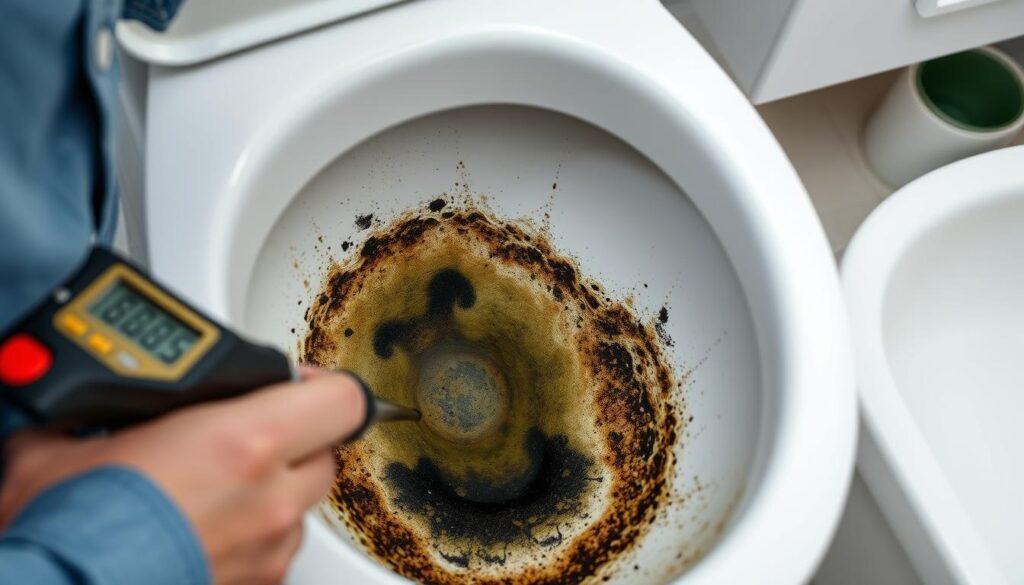
When dealing with mold in bathrooms and homes, getting a mold inspection is key. These services can find hidden bathroom mold and suggest how to fix it.
For a deeper look, they can test the air to find out what kind of mold it is. This takes longer but helps make a better plan to fix it. Places with a lot of moisture or where you see water are where mold likes to grow.
| Mold Testing Method | Advantages | Disadvantages |
|---|---|---|
| Non-viable air sampling | Faster, measures mold spore quantity | Does not identify mold types |
| Viable air sampling | Identifies specific mold types | Longer analysis time (10-14 days) |
Essential Prevention Strategies for Toilet Mold
Maintain Proper Ventilation
Good ventilation stops mold in your toilet. Make sure your bathroom has a big enough exhaust fan. Run it for at least 30 minutes after each use. This helps remove moisture and stops mold.
Adopt Regular Cleaning Practices
Cleaning often is vital for mold prevention. Clean surfaces, like the toilet bowl, with a mold-killing cleaner or vinegar. Also, wash towels, shower curtains, and rugs regularly to fight mold.
Address Leaks and Moisture Issues
Utilize Mold-Resistant Products
Use mold-resistant materials when updating your bathroom. Options include mold-resistant drywall or grout sealers. These products make it harder for mold to grow, offering long-term protection.
Effective Methods for Removing Toilet Mold
Dealing with toilet mold can be tough, but you can win back your bathroom’s sparkle. Begin by looking into natural cleaners that are soft yet strong against toilet mold.
Natural Cleaning Solutions
For any packaged cleaner or mold-control product, follow the manufacturer's current product label and safety instructions. Product choice does not replace correcting the moisture source or evaluating affected materials.
Professional Treatment Options
Always wear gloves and a N-95 mask when cleaning mold. Good ventilation and drying the area well are key to removing mold.
“Regular toilet cleanings every 7-10 days can significantly reduce the chances of mold development around the toilet rim.”
Long-term Maintenance Tips for a Mold-Free Toilet
- Make cleaning a regular part of your routine. Wash towels and mats every week to stop mold.
- Swap out fabric shower curtains every month to fight mold.
- Keep your bathroom well-ventilated to reduce moisture, which helps prevent mold.
- Choose mold-resistant items like anti-microbial bath mats and shower curtains for long-term protection.
When to Call Professional Mold Remediation Services
Signs You Need Expert Help
- Mold covers an area larger than 10 square feet
- Mold growth persists despite your cleaning efforts
What to Expect During Professional Treatment
When you hire a professional mold removal company, they start with a detailed assessment. This may include tests to find out what kind of mold you have. After that, they create a detailed mold treatment process to fix the problem.
The treatment usually includes:
- Containing the affected area to stop mold spores from spreading
- Using special cleaning methods to remove mold from surfaces
- Fixing the root cause of the mold, like leaks or poor ventilation
- Making sure the area is dry and dehumidified to stop mold from coming back
- Doing follow-up checks to make sure all mold is gone
Conclusion
FAQ
What are the common types of mold found in toilets?
Common molds in toilets include black, pink, red, white, and green.
What causes mold to grow in the toilet?
Mold grows in toilets due to stagnant water, high humidity, and darkness. Hard water deposits, poor cleaning, and mold in the water supply also contribute.
How can I identify signs of mold in my toilet?
Look for colored patches, fuzzy textures, and rings around the bowl or tank. Unusual smells like musty or earthy odors can also hint at mold.
How can I prevent mold growth in my toilet?
Prevent mold by ensuring good ventilation, regular cleaning, and fixing leaks quickly. Use a dehumidifier and maintain your toilet well. Flushing regularly and keeping the bathroom bright also helps.
What are some effective methods for removing toilet mold?
When should I call a professional mold remediation service?
Source Links
- Why Does Mold Grow In My Toilet & How to Prevent It?
- Mold in Toilet: How to Remove Mold in Toilet
- Mold Growing in the Toilet? Here’s What It May Mean
- "How Did Mold Get in My Toilet Bowl? 6 Possible Explanations" – PuroClean of San Clemente
- Ultimate Guide to Toilet Mold: Causes, Removal, and Prevention
- Is Mold in the Toilet a Sign of Diabetes? What the Research Says
- Mould in Toilet: Practical Tips and Remedies
- Say Goodbye to Black Mold in Your Toilet: Expert Tips and Tricks – NH’s Top Choice for Home Comfort | Sanford Temperature Control
- Understanding the Causes and Solutions for Mold in Toilets
- Is bathroom mold dangerous?
- Professional Mold Testing Services: Tell Scams from Science – Environix
- Do I Need a Mold Inspection After My Toilet Overflows?
- 15 Signs That Your Home Needs Mold Inspection and Testing
- Prevent and Treat Bathroom Mold: Essential Tips and Solutions
- How do you get rid of the under the rim toilet bowl mold?
- Why is Mold Growing Under The Rim of My Toilet?
- How to Prevent Mold From Growing in Your Bathroom – Consumer Reports
- Mold in Toilet – Prevention and Removal Guide [2024]
- Everything You Need To Know About Mold Around The Toilet – Done Plumbing, Heating, Cooling & Electric
- When to Call a Professional About Mold – Modernistic®
- How to Clean and Prevent Black Mold Growth in Your Bathroom
- How to Remove Black Mold in Toilet – Proficient Plumbing & Heating