

Appearance alone cannot reliably determine mold species.
This guide will show you how to find, check, and safely remove mold from your home. You’ll learn about different mold types and how to remove it yourself. You’ll get the tools and tips to make your home mold-free. Let’s start learning how to handle mold in your house.
Key Takeaways
- Mold is a common problem in many American homes, often caused by moisture and poor ventilation.
- DIY mold removal is possible for small-scale infestations, but larger issues may require professional help.
- Addressing the underlying moisture problem is key to preventing future mold growth.
- Regular monitoring and maintenance can help keep mold at bay in your home.
Understanding the Basics of Household Mold
Types of Common Household Mold
Signs of Mold Infestation in Your Home
- Visible mold growth on walls, floors, or ceilings
- Musty or earthy odors
- Water damage or high humidity levels
- Discoloration on surfaces
“Mold can grow almost anywhere in a home where there is moisture and organic material for it to feed on. Prompt attention to any moisture problems can help prevent mold growth.”
Essential Safety Equipment for DIY Mold Removal
Here are the must-haves for safe mold removal:
- Rubber gloves – They cover your mid-forearm to protect your skin from mold.
- Protective eyewear – Safety glasses or goggles without vents keep your eyes safe from mold debris and spores.
- Disposable protective clothing – Coveralls made of materials like Tyvek or microporous film laminate act as a barrier against mold.
- Waterproof boots – They help prevent mold spore exposure and reduce the risk of slips and falls in damp areas.
If your home has more than 10 square feet of mold, the EPA suggests getting professional help. Mold remediation experts have the right training and equipment for a safe and thorough cleanup.
Can I Remove Mold from My House Myself
Mold is a common problem for many homeowners. It’s tempting to try to remove it yourself. But, you should first check how bad the damage is.
Mold can make you feel stuffy, have sore throats, or cough. In serious cases, like with black mold, it can cause breathing problems and even depression.
Assessing the Extent of Mold Damage
First, figure out how big the mold problem is. Mold can grow in many places, like basements and kitchens. If it’s over 10 square feet, get a pro.
But, if it’s smaller, you might be able to remove it yourself.
When to Call Professional Help
Cost Comparison: DIY vs Professional Removal
Professional services might cost more upfront. But, they can fix the problem for good and save you money in the long run.
“Mold can be a serious problem, but with the right approach, it can be effectively addressed. The key is to act quickly and make an informed decision on whether DIY or professional mold removal is the best option for your home.”
Step-by-Step Guide to DIY Mold Remediation
Dealing with mold at home can feel overwhelming. But, you can handle it yourself with the right steps. Here’s a guide to help you through the mold cleanup steps and home mold removal process.
Contain the Affected Area
First, isolate the moldy area to stop spores from spreading. Use plastic sheeting to seal it off, making sure it’s well-ventilated. This step helps keep you safe while cleaning.
Choose the Right Cleaning Solutions
Scrub and Dry Thoroughly
For any packaged cleaner or mold-control product, follow the manufacturer's current product label and safety instructions. Product choice does not replace correcting the moisture source or evaluating affected materials.
Dispose of Contaminated Materials
If mold has damaged porous items like drywall, carpeting, or insulation, throw them away as per local rules. Non-porous surfaces can be cleaned and reused.
Protect Yourself
When cleaning mold, wear the right gear. This includes an N95 mask, rubber gloves, and safety goggles. It helps protect you from mold spores.
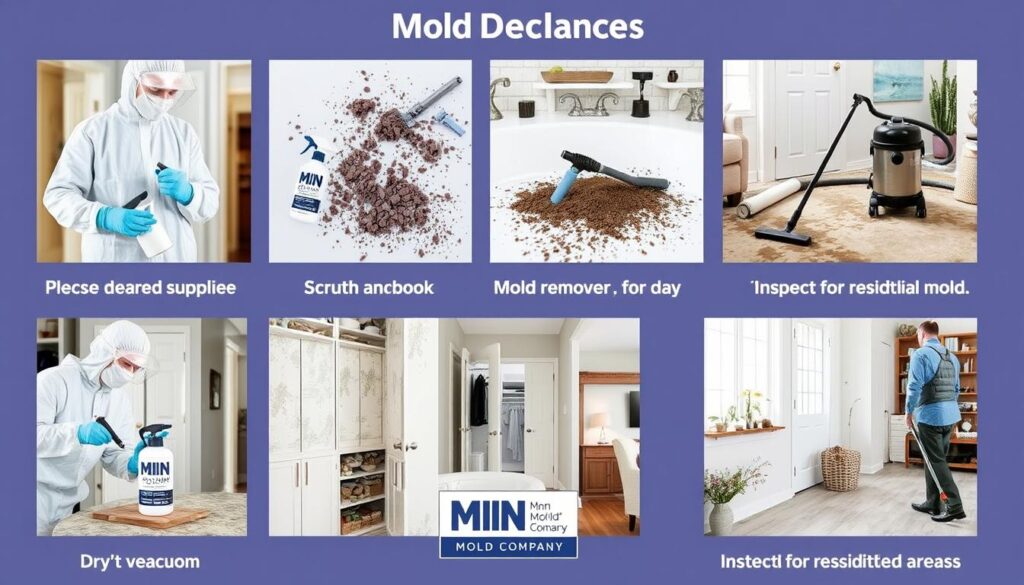
Natural and Chemical Solutions for Mold Treatment
Vinegar and Baking Soda Methods
Baking soda is also great for fighting mold. It has a pH that stops mold from growing. Mix baking soda with water, apply it with a sponge or brush, wait a few minutes, then scrub and rinse well.
Commercial Mold Removal Products
Safe Application Techniques
It’s important to be safe when dealing with mold. Wear masks, gloves, and goggles. Work in a place with good air flow. Also, dispose of moldy items properly to stop spores from spreading.
Preventing Future Mold Growth in Your Home
To manage humidity well, use dehumidifiers. They take out extra moisture from the air. Also, make sure your home gets enough air, especially in wet areas like bathrooms and kitchens. This helps stop mold from growing.
“Controlling moisture is the key to preventing mold growth in your home. Regular inspections and prompt action can make all the difference.”
Proper Disposal of Mold-Contaminated Materials
Removing mold from your home is just the start. Getting rid of mold-contaminated materials is also key to stop mold from spreading. It’s important to follow strict safety rules to protect yourself and others.
Safety Guidelines for Disposal
To safely get rid of mold-contaminated items, follow these steps:
- Seal all contaminated items, like drywall, insulation, or carpeting, in 6-mil plastic bags or wrap them securely.
- Double-bag heavily infested items to prevent spores from escaping.
- Avoid generating dust or disturbing the mold during the disposal process to minimize airborne spore dispersal.
Local Regulations and Requirements
Mold waste disposal follows local rules, so check with your local authorities or waste management service. They can tell you if you’re following the right steps. Some places have specific rules for mold-contaminated materials, like:
- Proper labeling and identification of mold-infested waste.
- Designated disposal sites or hazardous waste facilities for mold-affected items.
- Special handling requirements for certain types of mold-contaminated materials.
Post-Removal Monitoring and Maintenance
FAQ
What types of mold are commonly found in homes?
How can I identify signs of mold in my home?
Look for visible mold, musty smells, water damage, and surface discoloration. Mold can hide in places like behind walls or under carpets. A detailed check is needed.
What safety equipment is needed for DIY mold removal?
When should I call a professional for mold remediation?
Call a pro for mold over 10 square feet, big water damage, or if it’s in your HVAC. They can also find mold in hidden spots.
What is the process for DIY mold removal?
First, set up a containment area and control the air. Clean with the right solutions and dry everything within 48 hours. This stops mold from coming back.
What are some effective solutions for treating mold?
How can I prevent future mold growth in my home?
How do I properly dispose of mold-contaminated materials?
Put moldy items in 6-mil plastic bags or wrap them well. Follow local rules for disposal. Double-bagging is best for very contaminated items.
What steps should I take after completing DIY mold removal?
Source Links
- How to Get Rid of Mold – https://www.homedepot.com/c/ah/how-to-get-rid-of-mold/9ba683603be9fa5395fab907c52351c
- MMIMH_112017_ADA – https://www.cdph.ca.gov/Programs/CCDPHP/DEODC/EHIB/CPE/CDPH Document Library/Mold/MMIMH_English.pdf
- The Right Way to Get Rid of Mold in Your Home, According to Experts – https://www.marthastewart.com/273648/mold-tips
- Cleaning Mold In Your Home – https://www.dhs.wisconsin.gov/mold/clean.htm
- 9 Must Have Protective Gear/Equipments For Mold Removal – https://www.ultimatemoldcrew.ca/protective-gear-equipment-for-mold-removal/
- Do It Yourself Mold Remediation ………Instructions, Safety, Protocol – https://www.black-mold-guide.com/yourself-mold-remediation.html
- How to Get Rid of Black Mold – https://www.homedepot.com/c/ah/how-to-get-rid-of-black-mold/9ba683603be9fa5395fab90a432a6d0
- How To Get Rid Of Mold In Your Home And Prevent Future Growth – https://www.rockethomes.com/blog/homeowner-tips/mold-removal
- My Home Has Mold – Can I Remove It Myself? – https://cfrsfl.com/blog/my-home-has-mold-can-i-remove-it-myself/
- PDF – https://www.beyondtoxics.org/wp-content/uploads/GreatNaturalMoldCleaners-Instead-of-Bleach.pdf
- How To Remove Mold From Wood – https://www.thisoldhouse.com/green-home/21331232/killing-mold-on-wood
- How To Get Rid of Mold in Your Basement (2024 Guide) – https://www.thisoldhouse.com/foundations/reviews/how-to-get-rid-of-mold-in-basement
- Home Remedies: Removing Mold – https://earth911.com/home-garden/home-remedies-removing-mold/
- Get Rid of Mold in Your House With These Simple Steps – https://www.goodhousekeeping.com/home/cleaning/a34763321/how-to-get-rid-of-mold/
- Which natural methods to remove mould work | EnviroVent – https://www.envirovent.com/blog/how-to-remove-black-mould-do-those-old-wives-tales-really-work/
- Preventing Mold in Your Home – https://extension.uga.edu/publications/detail.html?number=C1047-1&title=preventing-mold-in-your-home
- How to remove mold from walls – https://www.1800gotjunk.com/us_en/blog/decluttering/remove-mold-from-walls
- How to Dispose of Mold Safely and Effectively – Waste Removal USA – https://wasteremovalusa.com/blog/dispose-of-mold/
- DIY Mold Removal: Can You Clean Up Mold Yourself? – https://www.airpf.com/can-you-clean-up-mold-yourself/
- Mold Removal: When to DIY the Job or Hire a Pro – Today’s Homeowner – https://todayshomeowner.com/mold/guides/mold-removal-when-to-diy-the-job-or-hire-a-pro/