
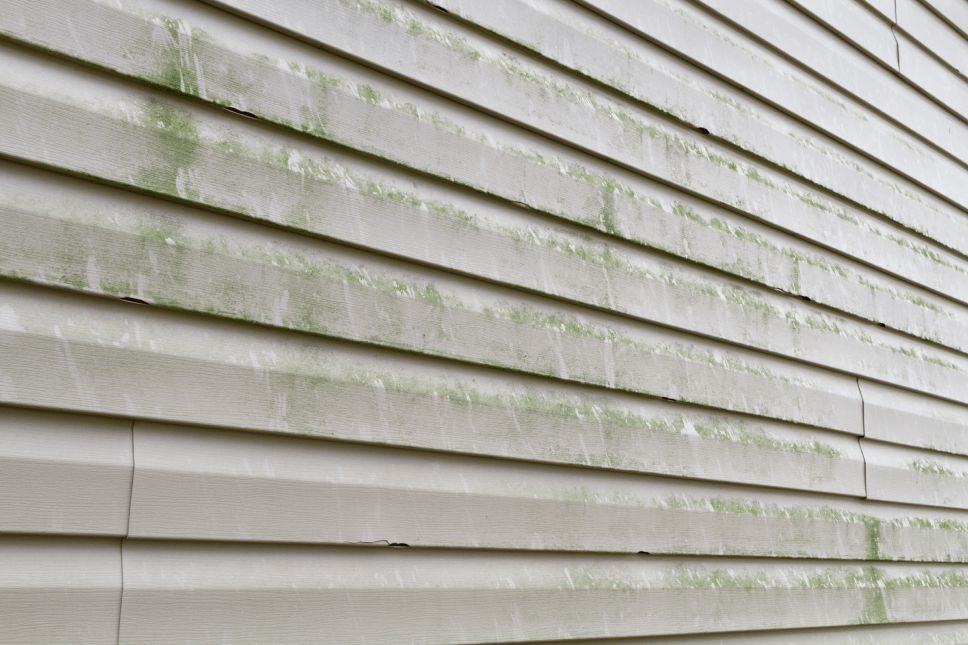
Okay so last spring I walked outside to check my gutters and literally stopped in my tracks. The entire north side of my house—the side that never gets direct sun—looked like it was growing a science experiment. Green streaks, black spots, this weird crusty stuff that I later learned was algae mixed with mold.
Welcome to Minnesota homeownership, I guess.
If you’ve got mold or algae growing on your vinyl siding in the Twin Cities, you’re not alone. And you’re not crazy for wondering why your house looks like it’s been sitting in a swamp when you literally just had it cleaned two years ago.
Let me tell you what I learned the hard way about cleaning mold off house siding in Minneapolis—and more importantly, how to actually keep it from coming back.
Why Twin Cities Homes Turn Into Mold Magnets
Here’s the thing about Minnesota that nobody tells you when you move here: the humidity plus our weird weather swings create the perfect conditions for mold and algae to just… take over your siding.
We get hot, humid summers where everything stays damp. Then we get freezing winters that trap moisture in your siding. Add in the fact that certain sides of your house never see sunlight (looking at you, north-facing walls), and you’ve basically created a mold spa.
The biggest culprits in Minnesota:
North-facing walls – They never dry out. The sun hits them maybe an hour a day if you’re lucky. That constant shade plus our humidity? Perfect for green mold on vinyl siding.
Tree coverage – If you’ve got mature trees (which, let’s be honest, half the reason we bought our houses), those shaded areas stay wet longer. The organic material from trees also feeds the algae.
Our springs and falls – Those stretches where it’s 50 degrees and drizzling for three weeks straight? Yeah, that’s when the green streaks show up.
Poor drainage – If your gutters dump water right next to your foundation or your yard slopes toward your house, you’re basically power-washing your siding with mold food.
Before you grab a ladder and a bucket of bleach, let’s talk about not dying or destroying your siding.
What you actually need:
- Rubber gloves (not those thin dishwashing ones, actual rubber gloves)
- Long sleeves and pants you don’t care about
- A sturdy ladder that’s properly rated for your weight plus whatever you’re carrying
- Soft-bristle brush or car wash brush (NOT a wire brush—you’ll scratch the hell out of your siding)
For any packaged cleaner or mold-control product, follow the manufacturer's current product label and safety instructions. Product choice does not replace correcting the moisture source or evaluating affected materials.
Things that will ruin your day:
- Pressure washing at full blast (you’ll crack your siding or force water behind it)
- Using a wire brush (permanent scratches)
- Working alone on a ladder above 8 feet (have someone spot you, seriously)
- Doing this when it’s above 85°F (cleaning solution evaporates too fast)
I learned that last one the hard way. Tried to clean my siding on a 90-degree day in July and basically just created a sticky mess that attracted more dirt.
Step-by-Step: How to Actually Remove Mold from Vinyl Siding in Minnesota
Alright, here’s what actually works. I tried three different methods before landing on this one.
Don’t skip this. I did the first time and just ended up smearing mud around.
You’ve got a few options here, and they all work depending on how bad your situation is.
For light to moderate mold and algae (the green streaks):
For heavier black mold on vinyl siding (the stuff that’s really set in):
You can buy TSP substitute at any hardware store. It cuts through the film that algae leaves better than anything else I’ve tried.
This feels wrong, but trust me: start at the bottom and work up.
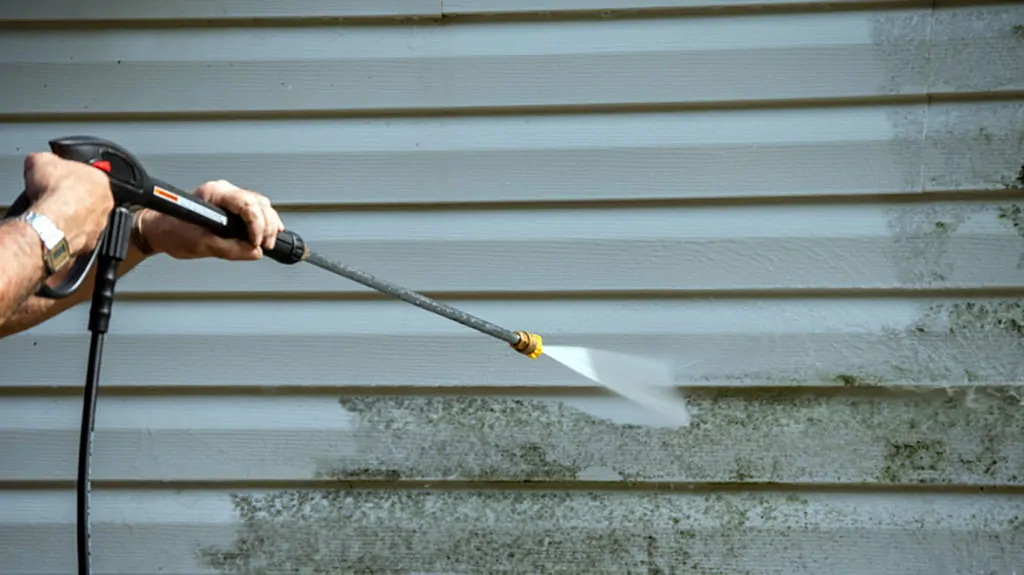
If you DO use a pressure washer (like I do for really stubborn areas), keep it on the lowest setting and hold the nozzle at a 45-degree angle, never straight on.
Best Products for Minnesota Weather
I’ve tried damn near everything at this point. Here’s what actually works in our climate.
For regular maintenance cleaning:
For removing algae from vinyl siding in Minnesota:
For heavy black mold:
- RMR-86 – This is the nuclear option. Removes stains in seconds but you need ventilation and you’ll want to follow up with something preventive. Hardware stores carry it, or order online.
For prevention:
DIY option that actually works:
How to Clean Vinyl Siding Mold in White Bear Lake (and Everywhere Else in MN)
The process is the same whether you’re in White Bear Lake, Minnetonka, or St. Paul, but there are some local considerations:
If you’re in older neighborhoods (Highland Park, Macalester-Groveland): Your trees are bigger and create more shade. You’ll need to clean more often—I’d say twice a year minimum on the shaded sides.
If you’re in newer developments (Woodbury, Lakeville): Less tree coverage means more sun, which means less mold… except on your north side. That will still get it.
Pressure Washing Vinyl Siding: Yes or No?
Look, I know every neighbor on your block has a pressure washer and swears by it. I have one too. But here’s the reality:
You can pressure wash vinyl siding mold in Minnesota, BUT:
- Keep PSI under 1,500 (most pressure washers go up to 3,000+)
- Use a 40-degree nozzle, never a 0-degree or 15-degree
- Hold it at least 12 inches away from the siding
- Never aim directly at seams, corners, or around windows
A contractor in Minnetonka told me he’s seen hundreds of houses with water damage behind the siding from overzealous pressure washing. The water gets forced up behind the siding at the seams, gets trapped, and causes rot or mold inside your walls.
So yeah. Be careful.
Preventing Mold on Vinyl Siding in Minnesota’s Climate
Cleaning is one thing. Keeping it from coming back is the real trick.
What actually helps:
Trim your trees and bushes – Get them at least 12-18 inches away from your siding. Better airflow = faster drying = less mold.
Fix your gutters – If water is overflowing and running down your siding, you’re just going to keep getting mold. Clean them twice a year (spring and fall).
Improve drainage – If water pools near your foundation, fix it. Extend your downspouts, add a rain garden, regrade if you need to.
Consider a mold-resistant coating – There are additives you can have mixed into exterior paint that inhibit mold growth. If you’re repainting anyway, it’s worth it.
DIY vs. Professional Vinyl Siding Mold Removal in the Twin Cities
Here’s when you should just call someone (like, say, a restoration company that deals with this stuff all the time):
Call a professional if:
- You’ve got mold on a two-story house and you’re not comfortable on ladders
- The mold keeps coming back within a few months of cleaning
- You see mold INSIDE your house near exterior walls (this means you have a moisture problem in your walls)
- Your siding is damaged or warped (mold might be the least of your problems)
- You’ve got black mold that won’t come off even with bleach (might be growing inside/behind the siding)
DIY is fine if:
- It’s just surface algae and light mold
- You have the time and equipment
- You’re comfortable on a ladder
- It’s a one-story house or you can reach everything from the ground
I do my own cleaning twice a year on the north side (where the mold shows up) and call professionals every 3-4 years for a full-house exterior cleaning. It’s just easier and they have better equipment.
The Bottom Line on Mold and Algae in Minnesota
If you own a house in the Twin Cities for more than five years, you’re going to deal with mold or algae on your siding at some point. It’s not a matter of if, it’s when.
The good news? It’s almost always just a cosmetic issue. The mold isn’t eating your siding (that’s vinyl, not wood). It just looks terrible.
Regular cleaning with the right products, decent drainage, and a little prevention goes a long way. And honestly, once you’ve done it a couple times, it’s maybe a 2-hour job twice a year.
Either way, your house will look like new again. At least until next spring.