
Appearance alone cannot reliably determine mold species.
Key Takeaways
- The duration depends on the severity and extent of mold contamination
- Professional services address the root causes of mold and prevent future recurrence
Understanding Professional Mold Remediation Services
Dealing with mold needs special knowledge and techniques. Unlike DIY methods, mold remediation services use EPA-approved treatments and the latest equipment. They effectively tackle mold growth.
What Makes Professional Remediation Different
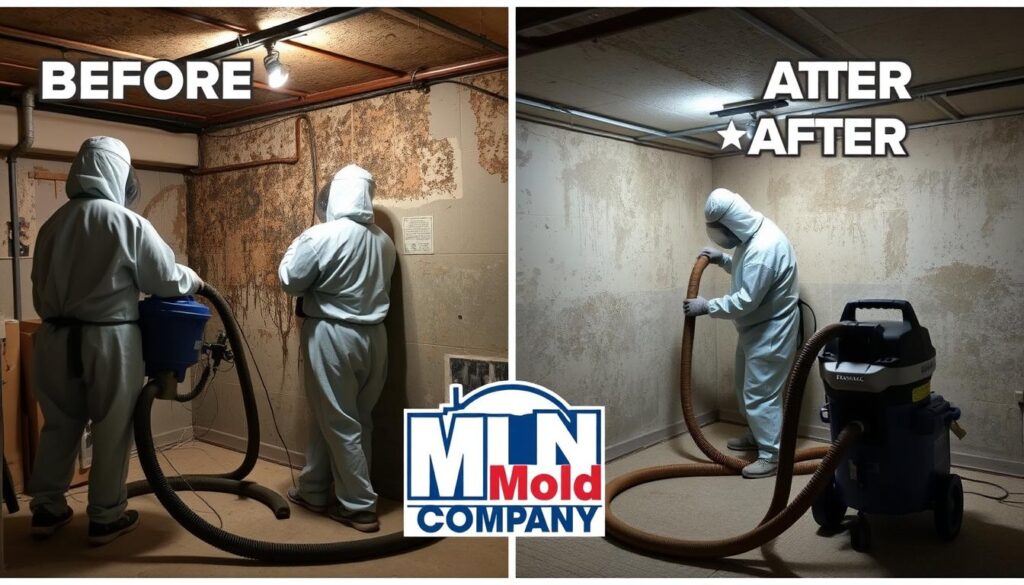
Professional mold services use advanced tools and methods. They detect, contain, and eliminate mold. This includes using infrared cameras to find hidden moisture and HEPA vacuums and air scrubbers to remove mold spores.
Types of Mold Commonly Found in Homes
- Aspergillus
- Alternaria
- Cladosporium
- Chaetomium
- Penicillium
“Mold growth can happen significantly in just 24 to 72 hours, which is approximately 3 days. Mold requires moisture to grow, and excessive water or moisture encourages mold growth.”
Initial Assessment and Inspection Process
Moisture Detection Methods
Finding where moisture comes from is the first step. Inspectors use tools like infrared cameras and moisture meters. These tools show where moisture is high, helping plan how to fix the problem.
Air Quality Testing Procedures
Creating a Remediation Plan
After checking everything, experts make a fix plan. This plan tells how to keep the area safe, remove bad stuff, and make it safe again. Each plan is made just for that place, to fix it right.
| Key Steps in the Initial Assessment | Benefits of Professional Mold Inspection |
|---|
Equipment and Tools Used in Professional Mold Removal
Professional mold removal services use special tools and equipment. These tools help remove mold safely and effectively. They also prevent mold from coming back.
Air Filtration Devices
Personal Protective Equipment
For any packaged cleaner or mold-control product, follow the manufacturer's current product label and safety instructions. Product choice does not replace correcting the moisture source or evaluating affected materials.
Specialized Cleaning Solutions
Containment and Prevention of Cross-Contamination
Keeping mold contained is key to stopping it from spreading. Mold remediation chambers isolate the mold to keep it from getting into clean areas. HEPA air filters and negative air pressure help keep the air clean during the cleanup.
Technicians wear special suits and masks to avoid mold spores. If they don’t, mold spores can spread, causing more problems and extra costs.
Containment hallways help move moldy stuff out safely. This limits mold growth and keeps everyone safe. Keeping everything contained is vital to stop mold from coming back and to make sure the cleanup works.
| Mold Containment Methods | Cross-Contamination Prevention Strategies |
|---|---|
|
|

Proper mold remediation containment is essential to prevent the spread of mold spores and ensure the success of the mold removal process.
Cleaning and Sanitization Techniques
Professional mold cleaning is a detailed process to get rid of mold and stop it from coming back. It uses special cleaning and sanitizing methods to tackle the problem at its source.
HEPA Vacuuming Process
Antimicrobial Applications
Disposal of Contaminated Materials
Post-Remediation Verification and Testing
Ensuring the success of mold remediation efforts is crucial. This is where post-remediation verification and testing come in. They involve a thorough inspection, air quality testing, and moisture level assessments. These steps confirm the area is safe for occupancy and restoration.
The post-remediation inspection includes visual observations, moisture measurements, and air samples. These tests assess the areas that have undergone mold remediation work. Clearance testing is key to confirm mold removal and no further contamination.
- Visual inspection to check for any remaining signs of mold growth or water damage
- Moisture level testing to ensure proper drying and reduced humidity levels
- Air quality testing to verify that mold spore concentrations have returned to acceptable levels
Clearance testing is often done by a third-party testing firm for unbiased results. This step is crucial. It helps identify any remaining issues that may have been missed during remediation. If clearance testing fails, more remediation work may be needed before the area is safe for reoccupation.
| Potential Clearance Testing Issues | Recommendations |
|---|---|
| Delayed testing after remediation | Conduct testing within 24-48 hours of project completion |
| Elevated mold levels post-restoration | Perform additional cleaning and sanitization until acceptable levels are achieved |
| Inadequate sampling techniques | Utilize best practices for air sampling and analysis to ensure accurate results |
By following strict post-remediation verification and testing protocols, homeowners and property managers can be confident. They know the post-remediation inspection, clearance testing, and mold testing meet the highest industry standards. This ensures the safety and well-being of the occupants.

Preventive Measures and Maintenance
Moisture Control
Prompt Leak Repairs
Fixing water leaks fast is crucial. Mold can start growing in just 48 hours after water damage. So, it’s important to find and fix leaks in your plumbing, roof, or walls quickly.
Humidity Monitoring
| Mold Prevention Technique | Description |
|---|---|
| Proper Ventilation | Ensure adequate airflow, especially in high-moisture areas like bathrooms and kitchens. |
| Prompt Leak Repairs | Address water leaks and moisture problems immediately to prevent mold growth. |
| Humidity Monitoring | Use a hygrometer to track indoor humidity levels and take action if they exceed the recommended range. |
Industry Standards and Guidelines
Required Certifications for Mold Remediation
FAQ
What are the steps involved in professional mold remediation?
Professional mold remediation starts with an inspection. Then, it moves to containment, cleaning, and sanitization. Finally, a verification step ensures the mold is gone and the area is safe.
What kind of equipment is used in professional mold removal?
How do professionals contain mold to prevent it from spreading?
To stop mold from spreading, professionals use plastic sheeting and negative air pressure. They also set up physical barriers. This keeps mold spores from spreading.
What air filtration techniques are used during mold removal?
HEPA air filters are used to catch mold spores in the air. This makes the area safe and prevents mold from spreading.
How do professionals clean and sanitize after mold remediation?
Cleaning involves HEPA vacuuming and antimicrobial treatments. Affected materials are disposed of properly. Non-porous surfaces are treated with fungicides, while porous ones may need to be replaced.
How are mold-contaminated materials disposed of?
Contaminated materials are bagged and sealed before disposal. This follows local regulations to prevent further contamination.
How long do professional mold removal projects typically take?
Mold removal projects can last from 1 to 5 days. The time depends on how widespread the mold is.
What post-removal testing is done to ensure mold is gone?
After removal, professionals do a final check. This includes air sampling and moisture testing. They also visually inspect to confirm the mold is gone.
What certifications do professional mold remediators hold?
What safety protocols are followed during professional mold removal?
Safety is key during mold removal. Remediators wear protective gear and follow guidelines for handling and disposing of mold-contaminated materials.
Source Links
- What to Expect During the Mold Remediation Process – https://callservicefirst.com/what-to-expect-during-the-mold-remediation-process/
- 8 Steps to Successful Mold Remediation | Pur360 – https://pur360solutions.com/8-steps-to-successful-mold-remediation/
- Mold Remediation: All About the Basics and Process for Removal – https://www.thespruce.com/is-mold-remediation-worth-it-1822834
- Mold remediation, mold abatement, mold restoration services for your home or business – https://www.servpro.com/services/mold-remediation
- What Is Professional Mould Remediation? – https://www.puremaintenanceuk.com/learn/what-is-professional-mould-remediation
- Proper Mold Assessment and Removal Process – https://www.moldsci.com/blog/posts/proper-mold-assessment-and-removal-process
- From Inspection to Remediation: What Happens During Professional Mold Removal? | MasterClean | Mold Removal Services Valparaiso – https://www.mastercleanselect.com/from-inspection-to-remediation-what-happens-during-professional-mold-removal/
- How to Perform Initial Inspection for Mold Remediation – https://www.randrmagonline.com/articles/90843-how-to-perform-initial-inspection-for-mold-remediation
- 9 Must Have Protective Gear/Equipments For Mold Removal – https://www.ultimatemoldcrew.ca/protective-gear-equipment-for-mold-removal/
- 5 Steps to Proper Mold Removal and Mold Remediation – https://www.probuilder.com/5-steps-proper-mold-removal
- Mold Remediation Equipment Professionals Use to Kill Mold – https://gocodes.com/mold-remediation-tools-equipment/?srsltid=AfmBOopcA8vP3i_98WngOm9Zh_fV0TUOlQ6sC5Nh_yu3UaQkJfk5p8ob
- Mold Remediation Basics Part I: Containment – https://www.moldsci.com/blog/posts/the-basics-of-mold-remediation-part-i-of-iii-containment-of-the-affected-area
- Mold Remediation Containment | Professional Mold Removal Process – https://mastertechmold.com/mold-remediation-containment/
- Mold Containment And Its Importance In Mold Removal – – https://mastertech-monoc.com/why-containment-is-important-in-mold-removal/
- Mold Removal | The Top 8 Techniques – https://titanrebuild.com/the-top-8-mold-removal-techniques/
- The Entire Process of Mold Remediation Services – https://www.usacleanmaster.com/blog/steps-of-mold-remediation-service/
- How Does A Professional Cleaning Service Tackle Mold? | Lazy Susans Cleaning Service – https://www.lazysusanscleaning.com/blog/how-does-a-professional-cleaning-service-tackle-mold
- POST REMEDIATION VERIFICATION – Mold Inspection, Assessment, & Testing Services – https://ntxenviro.com/post-remediation-verification/
- What Is A Mold Clearance Test | GreenWorks Environmental LLC – https://greenworksllc.com/mold-clearance-test/
- Post Remediation Testing – https://cfmoldinspect.com/post-remediation-testing
- How To Remove Mold From Your Home – https://www.progressive.com/lifelanes/home-mold-removal-tips/
- Requirements of a Mold License and What that Means for You – https://clearrestore.com/benefits-mold-license/
- When It Comes To Mold Remediation, Certifications Matter | MoldPro LLC – https://moldprollc.com/when-it-comes-to-mold-remediation-certifications-matter/
- How Professional Mold Remediation Can Restore Your Home – https://www.unionrestoration.com/blog/professional-mold-remediation