
Key Takeaways
- Mold needs moisture, warmth, and organic material to grow, making basements vulnerable to infestations.
- Preventing mold is more cost-effective than removing an established colony.
- Effective mold prevention strategies include controlling humidity, addressing leaks, and improving ventilation.
- Regular cleaning and decluttering can also help keep mold at bay in your basement.
- Professional mold inspection services can identify and address hidden mold issues.
But before we dive into the strategies, let’s answer a question that may be on your mind: Why is my basement so prone to mold growth in the first place?
Understanding Mold Growth in Basements
Basements are prone to mold because of their unique conditions. High humidity and poor air flow make them perfect for mold and fungus.
Common Causes of Mold Growth
Water or moisture is a big reason for mold in basements. Leaks, floods, or too much condensation can cause mold. Also, neglected HVAC systems and ductwork can lead to mold.
Signs of Mold Presence
Finding mold in basements can be hard because it hides in damp spots. Look for a musty smell, visible mold, and color changes on walls. Remember, a musty smell can mean mold is there, even if you can’t see it.
Preventing Moisture and Mold in Your Basement
Cleaning and getting rid of clutter are vital for a dry basement. Use a top-notch HEPA filter vacuum to clean well. Always clean up spills right away. Also, avoid storing wet items, as they can make the air more humid.
- Vacuum with a HEPA filter vacuum regularly to remove dust and debris
- Discard any clutter or damp items that may be contributing to moisture buildup
- Address leaks and water damage promptly to prevent further issues
Good drainage and waterproofing are also key for a dry basement. Make sure your gutters and downspouts work right, keeping water away from your foundation. You might also want to think about waterproofing your basement walls or installing a drainage system.
Keeping humidity levels in check is another smart move. A good dehumidifier can help keep the air dry and stop mold. Make sure to clean and empty it often to keep it working well.
Good air flow is also important for a dry basement. Adding exhaust fans can help move air and prevent moisture buildup. Also, make sure your basement windows and pipes are well-insulated to cut down on moisture.
Regular Cleaning and Decluttering
Keeping your basement clean and clutter-free is key to fighting mold. Regular vacuuming and cleaning can greatly help stop mold spores from growing. Here are some important tips for cleaning and decluttering your basement.
Vacuum with HEPA Filters
Using a vacuum with a High-Efficiency Particulate Air (HEPA) filter is crucial. HEPA filters catch even the smallest particles, including mold spores. Make sure to clean hard-to-reach spots where mold likes to grow.
Discard Clutter and Damp Items
Basements often collect unused items, which can lead to mold. Sort through your basement and get rid of items you no longer need. Throw away any damp or water-damaged items, as they can attract mold. By removing clutter and damp items, you make your basement less welcoming to mold.
Address Leaks and Water Damage Promptly
Regularly check your basement for signs of water seepage or dampness. Look for cracks in pipes, walls, and floors where moisture might get in. If you find a leak, act fast to stop the water and clean any affected areas. Not fixing moisture issues promptly can let mold start growing, so time is critical.
If your basement floods or gets a lot of water, dry it out within 48 hours. This quick action is vital to preventing mold growth from water problems. Use fans, dehumidifiers, and other drying tools to dry the basement completely. This ensures there’s no dampness left for mold to grow on.
“Addressing water damage and leaks promptly is crucial to preventing mold growth, as excess moisture creates the perfect environment for mold to thrive.”
Ensuring Proper Drainage and Waterproofing
Maintain Gutters and Downspouts
Clean and working gutters and downspouts are key. They help direct rainwater away from your home’s foundation. If they’re clogged or damaged, water can overflow and enter your basement.
This can lead to moisture buildup and mold growth. Regularly check and clean your gutters to prevent these issues.
Exterior Waterproofing Strategies
There are also exterior waterproofing methods to keep your basement dry. French drain systems and shrubbery can help move water away. Proper grading around the foundation also prevents leakage and high humidity.
Regulate Humidity Levels
Use Dehumidifiers Effectively
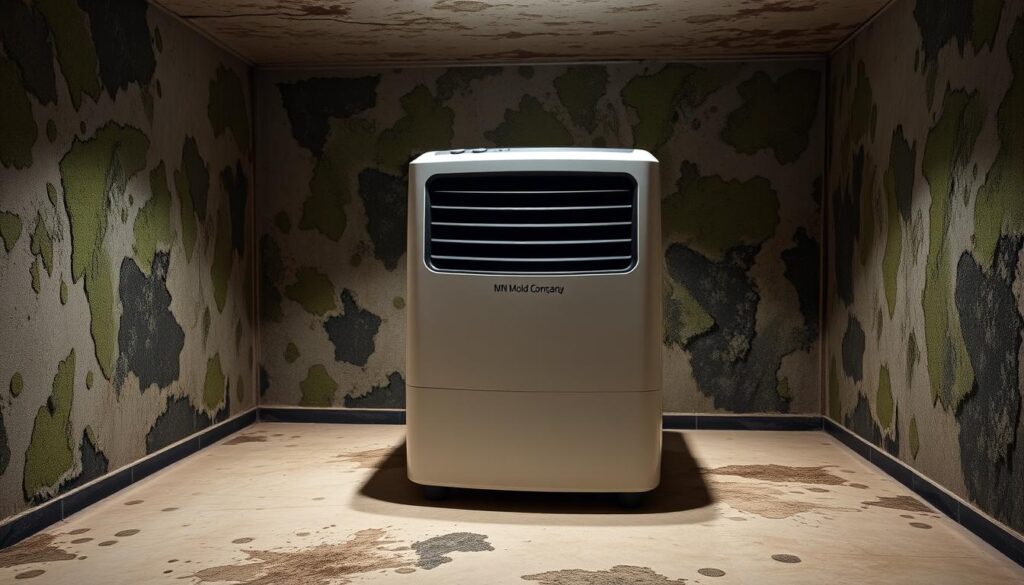
Dehumidifiers are great for managing moisture in your basement. They pull out extra water from the air, keeping humidity levels just right. When picking a dehumidifier, make sure it fits your basement’s size and moisture levels.
- Choose a dehumidifier that matches your basement’s square footage.
- Check the unit’s water removal rate to ensure it can effectively control the humidity in your basement.
- Regularly empty the dehumidifier’s collection tank to maintain optimal performance.
Insulate Basement Windows and Pipes
Using materials like fiberglass for your basement windows can block cold air and keep warm, moist air in. This cuts down on condensation, which can lead to mold. Also, insulating pipes in the basement keeps them from freezing in winter. This stops pipes from bursting and saves you from water damage.
| Insulation Benefits | Insulation Drawbacks |
|---|---|
|
|
“Properly insulating your basement is one of the most effective ways to control moisture and prevent mold. It’s a smart investment that can pay dividends in the long run.”
Ventilate Your Basement Properly
Proper ventilation in your basement is key to stopping mold and keeping it dry. Even unfinished basements need good airflow to avoid moisture and mold. By improving ventilation, you can make your indoor air better and your living space more comfy.
Install Exhaust Fans
Installing exhaust fans is a great way to boost basement ventilation. These fans pull out moist air, helping airflow in the basement. They are vital for basement ventilation for mold prevention and using exhaust fans to improve airflow. Good ventilation is essential for a dry, mold-free basement.
- Place exhaust fans near areas that get wet, like bathrooms or laundry rooms.
- Make sure the fans vent to the outside to get rid of the moist air.
- Pick fans that are energy-saving and quiet for the best results.
Prevent Mold in Basement with Smart Storage
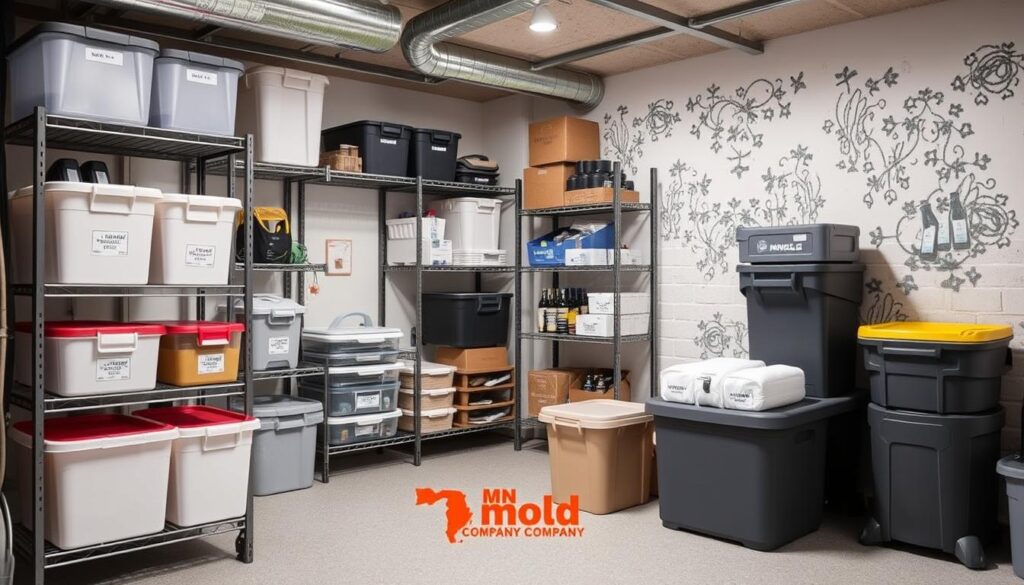
Choose mold-resistant basement storage tips to fight mold. Use plastic containers for storing clothes, books, and papers. Cardboard, being porous, quickly attracts mold. Plastic containers, on the other hand, keep moisture out and mold away.
Steer Clear of Carpets and Wood
- Carpets and rugs trap moisture, becoming mold breeding grounds.
- Wood furniture, shelves, and framing feed mold, letting it thrive in your basement.
- Don’t store wood, books, and other organic materials in your basement to prevent mold growth.
“The key to preventing mold in your basement is to control moisture levels and avoid materials that can become mold-friendly.”
Handle Laundry Room Moisture
Running a dehumidifier in your basement laundry room is a smart move. This device pulls out extra moisture from the air. It keeps humidity levels down and stops mold from growing. Also, putting in an exhaust fan that links to your basement’s air system helps a lot. It moves damp air out of the laundry area.
| Strategy | Benefits |
|---|---|
| Use a Dehumidifier | Removes excess moisture from the air, preventing mold growth |
| Install an Exhaust Fan | Improves air circulation and expels damp air from the laundry area |
| Move Washer/Dryer out of Basement | Significantly reduces moisture introduced into the lower level |
Get Professional Mold Inspection Services
- Free mold inspections to find any basement issues
- Easy online booking for mold assessments when you want
| Service | Description | Price |
|---|---|---|
| Mold Inspection | Comprehensive assessment of your basement for mold growth | Free |
| Mold Remediation | Professional removal and cleanup of any confirmed mold issues | Varies based on scope |
| Moisture Control | Implementation of strategies to prevent future mold development | Varies based on needs |
Conclusion
Stopping mold in your basement is a big job. You need to fix moisture problems, keep air moving, and store things right. Also, check for leaks and get help from mold experts when needed.
FAQ
What are the key steps in dealing with basement mold growth?
To tackle basement mold, first, contain it to stop it from spreading. Next, kill the mold. After that, remove the dead mold. Finally, protect your basement and nearby areas from future mold.
What are the common causes of mold growth in basements?
Basements are mold magnets due to high humidity and poor air flow. Plumbing and HVAC ducts also play a role. Water issues like flooding or leaks, and condensation from cold and humid air, are common mold causes.
How can I check for mold in my basement?
Sniff for a musty smell to detect mold easily in basements. Visible mold is hard to spot since it grows in hidden, damp areas.
What are some key strategies for preventing moisture and mold in my basement?
Regular cleaning and vacuuming with a HEPA filter vacuum are key. Minimize moisture by quickly wiping down leaks and spills. Avoid storing damp items in the basement. Discard clutter, repair leaks, and ensure good ventilation to prevent mold.
How can I effectively clean and declutter my basement to prevent mold?
Regular cleaning and vacuuming with a HEPA filter vacuum can remove mold sources. Avoid hoarding items, as mold thrives on moisture and dust. Discard unused items to prevent mold growth.
Why is it important to address leaks and water damage promptly in my basement?
Fixing leaks and water damage quickly is vital to stop mold. Excess moisture is mold’s perfect environment. Regularly check your pipes and walls and clean up any leaks or spills fast.
How can proper drainage and waterproofing help prevent mold in my basement?
Clean gutters and downspouts ensure rainwater flows away from your foundation. Waterproofing tactics like French drains and proper grading can also help. These methods prevent leakage and high humidity in your basement.
How can I regulate humidity levels in my basement to prevent mold?
Why is proper ventilation important for preventing mold in my basement?
Even unfinished basements need good ventilation. Proper airflow prevents moisture buildup and mold. Installing exhaust fans that vent outdoors can improve air circulation and prevent humidity.
What types of items should I avoid storing in my basement to prevent mold?
Avoid storing clothes, books, papers, and carpets in your basement. Use plastic containers instead of cardboard boxes. Mold grows on moisture-holding items like paper, wood, and fabric. Plants and wood also feed mold, so avoid decorating with them.
How can I prevent mold growth in my basement laundry room?
If laundry is in the basement, use a dehumidifier or extra venting to reduce moisture. A musty smell means poor ventilation. If possible, move your washer and dryer out of the basement to reduce moisture.
When should I call a professional for mold inspection services?
Source Links
- How to Prevent Mold Growth in Your Basement & Crawl Space
- The Experts’ Guide to Preventing Mold In Basements
- 15 Basement Mold Prevention Tips