

Appearance alone cannot reliably determine mold species.
Ever walked into a home and smelled something musty? That smell could mean mold is present. It’s a warning sign to watch out for.
Key Takeaways
- Musty odors can indicate the presence of mold, even in hidden areas.
- Water stains and discoloration are signs of past leaks and potential mold growth.
- Poor ventilation creates the ideal environment for mold to thrive.
- Visible mold growth in various colors and textures is a clear sign of a problem.
- Slow leaks and appliance issues can also contribute to mold development.
The Lingering Musty Odor
A musty smell in your home can be a sign of mold. This smell, often earthy, points to mold growth in damp places like basements and bathrooms.
Walking into a home with a musty smell in home and mold concerns is a warning. It means you should look closer. This smell tells your body there might be signs of mold in air conditioning units or mold in damp areas. It’s important to ask about the property’s water damage and mold history.
“A musty smell is one of the most telltale signs of mold presence, signaling potential mold growth in areas like basements, bathrooms, and other damp places.”
Mold loves damp places, and the smell is often the first sign. If you notice a damp smell, it could mean there’s mold. Paying attention to these smells can help you find mold before it gets worse.
Water Stains and Discoloration
When you check a home, look for water stains on ceilings, walls, or near windows. These signs can show past leaks and mold issues. Also, look for discoloration, peeling paint, or warped floors. These can hint at mold growth, even if repairs seem done.
Water stains and discoloration are more than just looks. They show how to detect mold behind walls and moisture problems. By checking these areas well, you can find hidden mold growth. This helps fix the problem before it gets worse.
Spotting Signs of Mold
Discolored walls, ceilings, or floors might mean black mold or other fungi. Watch closely where water damage has happened before. These spots are where mold likes to grow. Even if you can’t see it, moisture might still be there, causing more mold growth behind walls.
| Visual Indicator | Potential Mold Issue |
|---|---|
| Water stains | Past leaks or moisture intrusion |
| Discoloration | Active mold growth, potentially hidden |
| Peeling paint | Moisture damage and mold growth behind walls |
| Warped floors | Chronic moisture problems and mold |
By watching for these visual indicators of mold growth, you can act early. This helps fix moisture issues and stops harmful fungi from spreading.
History of Water Issues
When looking for mold behind walls, knowing a home’s water history is key. Ask the seller or agent about past water problems. Issues like floods or leaks can mean mold is hiding, even if fixed before.
| Potential Water Issues | Implications for Mold |
|---|---|
| Past Floods | Increased risk of hidden mold growth in walls, floors, and other structures |
| Recurring Leaks | Potential for ongoing moisture buildup and mold development |
| Improper Remediation | Failure to address the root cause can lead to persistent mold issues |
“Mold can often be found in areas with a history of water damage, even if the original issue has been addressed. It’s crucial to understand the property’s past to ensure a complete and effective mold assessment.”
Poor Ventilation
A home without good ventilation is a perfect place for mold to grow. Not enough air can trap moisture, causing fungus to spread in damp spots. When looking for mold signs, check the air quality, especially in wet areas like kitchens, bathrooms, and laundry rooms.
Signs of bad ventilation include a stuffy, humid feel and a musty smell. These signs can mean water damage or ongoing issues that help mold grow. Make sure exhaust fans and vents work well to remove moisture and keep air moving.
Identifying Mold in Damp Areas
Ignoring ventilation can lead to mold early on. Fixing ventilation issues quickly can stop mold from spreading and keep your home’s air clean. Remember, bad ventilation is a key early sign of mold in the house to watch for.
Good ventilation controls moisture and keeps air moving, making it harder for mold to grow in damp places. When checking for how to identify mold in damp areas, ensure your ventilation system is working right and well.
Signs of Mold
Looking for mold in your home? There are key signs to watch for. Bathrooms and kitchens are at high risk because they’re wet. Check the caulking and grouting around sinks, bathtubs, and showers.
Cracks, gaps, or black mold in these spots mean moisture has reached behind walls and under floors. This can hide mold growth. Look for discoloration, peeling paint, or warped floors too. These signs might point to mold problems, even if leaks have been fixed.
By watching for visual indicators of mold growth, you can protect your home and family. If you think you have a mold problem, get help from a professional right away.
Condensation and Moisture Problems
Seeing mold signs in your home might mean a bigger problem is coming. Excess moisture or condensation is often a sign. Water droplets on walls or windows could mean mold is growing out of sight.
Condensation happens when warm, humid air meets a cold surface. This can be windows or exterior walls. Too much moisture is a warning sign that mold might grow.
Condensation usually starts on windows, ductwork, and exterior wall corners. These spots are cooler, making them perfect for moisture to gather. If you see a lot of condensation, it’s time to find out why.
| Common Condensation Hotspots | Potential Mold Concerns |
|---|---|
| Windows | Mold growth on window frames and sills |
| Ductwork and air vents | Mold accumulation in HVAC system |
| Corners of exterior walls | Mold spreading behind walls and insulation |
Visible Mold Growth
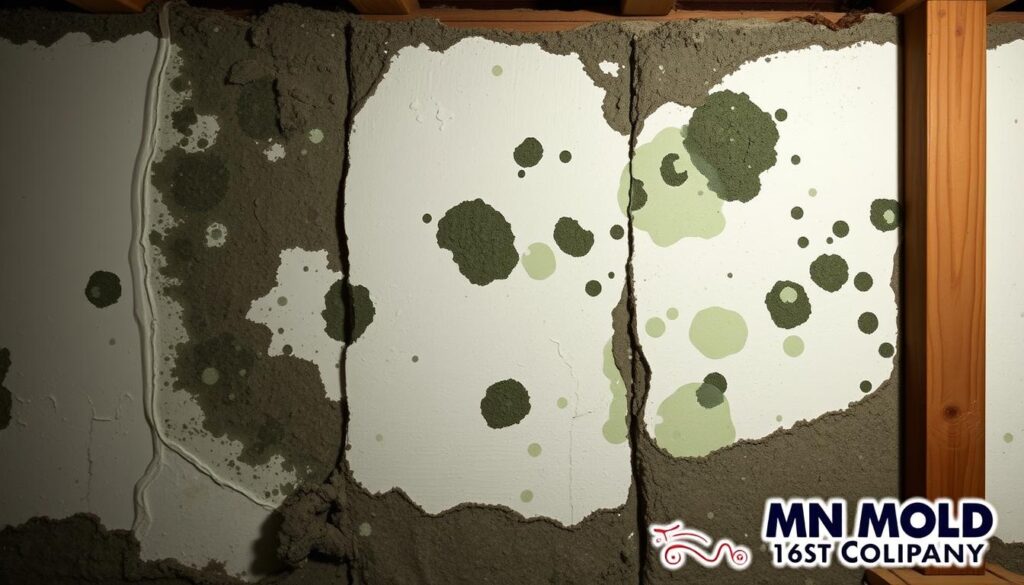
Mold growth in your home is easy to spot. It comes in many colors, shapes, and textures. Common colors include gray, black, and green. But, it can also be white, pink, blue, red, purple, brown, or a mix of colors.
Spotting Black Mold
Slow Leaks and Appliance Issues
Mold can sneak into your home without you noticing. It often hides in spots that are hard to see. Slow leaks and broken appliances are common culprits. For example, a leaky washing machine or dishwasher can soak the surrounding wood or floor.
Similarly, a leaky P-trap under a sink can cause moisture to build up. This creates a perfect spot for mold to grow behind walls.
| Appliance/Fixture | Common Mold Risks | Recommended Inspection Frequency |
|---|---|---|
| Washing Machine | Water leaks, excess moisture | Monthly |
| Dishwasher | Water leaks, excess moisture | Monthly |
| Refrigerator | Condensation, water leaks | Every 2-3 months |
| Kitchen/Bathroom Sink | Leaky P-trap, slow drains | Every 2-3 months |
Stains and Discoloration on Surfaces
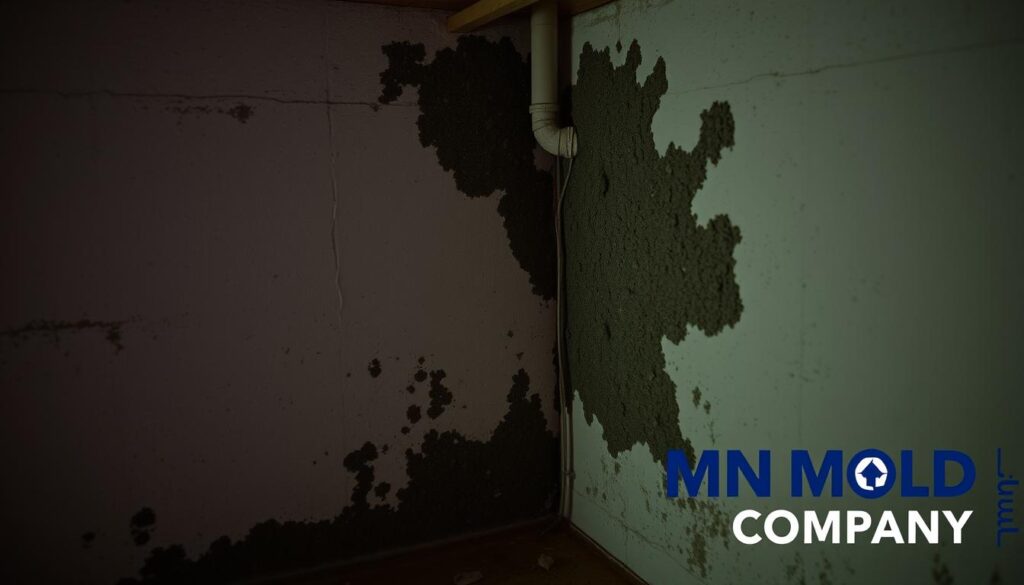
Looking for mold growth? Visual signs can help. Stains and discoloration on surfaces are big clues. They show up on walls, ceilings, air vents, and floor molding.
Identifying Water Stains and Discoloration
Water stains on walls or ceilings mean past leaks or water damage. They look like dark patches. These stains can lead to mold, even after repairs.
Discoloration, peeling paint, or warped floors are also signs. They point to moisture problems.
Stains on kitchen and bathroom cabinets, or floor molding, also hint at moisture. This could mean mold is growing.
Stay alert for these signs. They help you find and fix moisture issues. This stops harmful mold from growing in your home.
Hidden Mold and Musty Smells
At times, you might smell a musty smell before seeing any early signs of mold in house. Mold can hide in spots like the underside of drywall or inside air ducts. A strong, earthy odor often means mold is present, even if you can’t see it.
If your home smells damp and lingering, it’s important to find the cause. Mold loves damp places, so checking for moisture is key. Fixing any moisture problems and inspecting your home can help find and fix hidden musty smell in home.
- Investigate any persistent, musty odors as they may indicate hidden mold growth
- Look for moisture problems, water stains, or other signs of dampness that could be fueling mold growth
- Conduct a thorough inspection, including checking hard-to-reach areas, to identify the source of the musty smell
- Address any underlying moisture issues and take steps to remediate any mold found to prevent further spread
| Musty odor | Hidden mold growth | Inspect for moisture issues, check hard-to-reach areas |
| Water stains or discoloration | Past leaks or moisture problems | Investigate source, address any underlying issues |
| Visible mold growth | Excess moisture, poor ventilation | Identify and resolve moisture problems, remediate mold |
Conclusion
When you start looking for a new home, watch out for mold signs. A musty smell or visible mold can be serious. Always ask about the home’s history and get a professional inspection to check for mold.
FAQ
What are the early signs of mold in a house?
Early signs of mold include a musty smell and water stains on ceilings and walls. You might also see discoloration or peeling paint. Look for a history of water issues and poor ventilation too.
How can I detect mold behind walls?
Look for water stains and discoloration on walls. Past leaks or water damage are also signs. Excessive moisture and condensation can hide mold growth.
How can I spot visual indicators of mold growth?
Look for discoloration, staining, and actual mold in various colors and textures. Gray, black, or green mold is common. But, you might also see white, pink, blue, red, purple, or brown mold. It can look fuzzy, powdery, velvety, or slimy.
How do I identify black mold in my home?
How can I identify signs of mold in my air conditioning unit?
Look for a musty smell, visible mold, and water damage or leaks. Regular HVAC checks can prevent mold from spreading through your home’s air.
How can I identify mold in damp areas of my home?
Mold loves damp places like basements, bathrooms, and laundry rooms. Watch for a musty smell, discoloration, and visible mold. Fix any moisture issues to stop mold growth.
How can I detect mold in my household basement?
What should I do if I notice a musty smell in my home?
A musty smell means mold might be hiding. Investigate and find the source to prevent it from getting worse. Check for water damage, poor ventilation, or other moisture sources.