
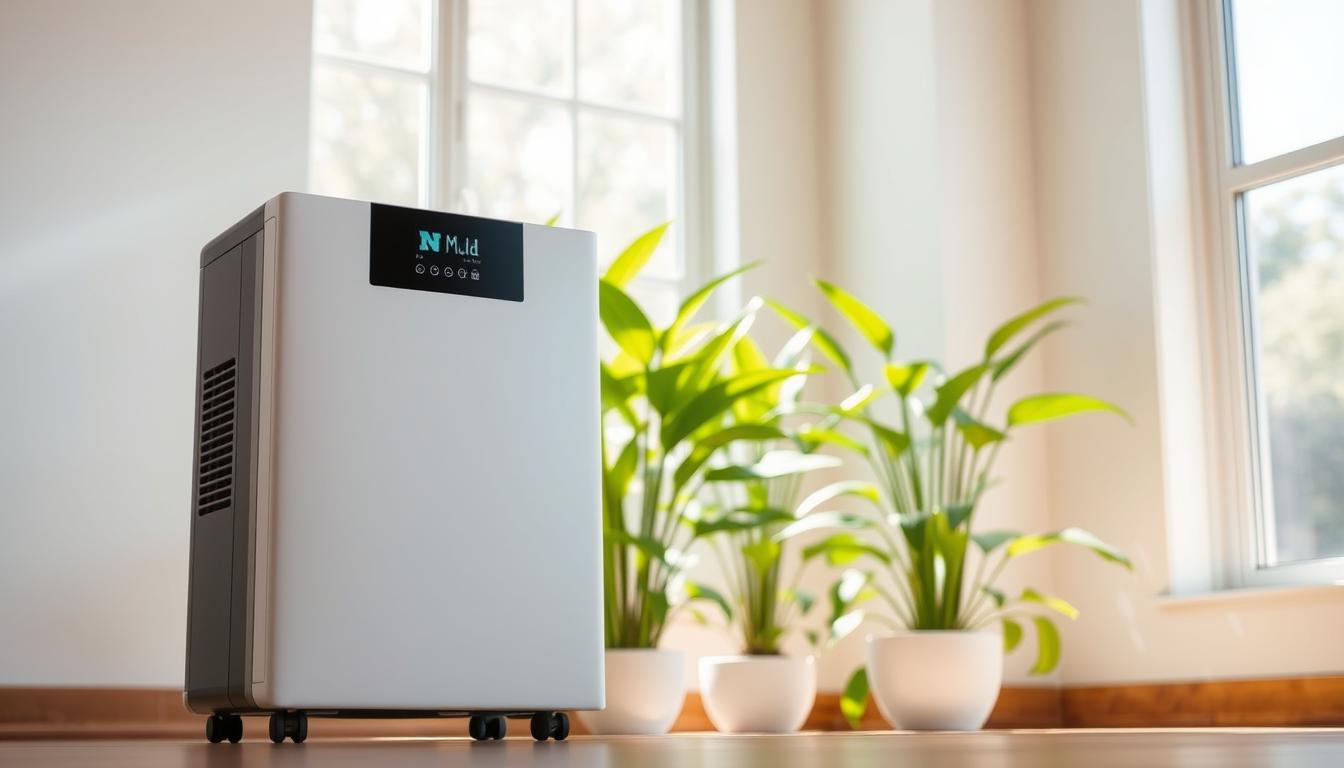
Are you tired of dealing with musty odors and mold growth in your home? Maintaining the right indoor humidity levels is crucial for preventing these issues. A dehumidifier can be your most powerful ally in this fight.
By removing excess moisture from the air, a good dehumidifier helps create an environment where mold and mildew can’t thrive. But not all dehumidifiers are created equal. In this article, we’ll explore the best options available, comparing their features, energy efficiency, and customer reviews.
From compact models for small spaces to whole-house systems, we’ll guide you through the key considerations for choosing the right dehumidifier for your needs. Whether you’re dealing with a damp basement or a humid living area, the right unit can make all the difference.
Key Takeaways
- Top-rated dehumidifiers are tested across various climates for reliability.
- Energy-efficient models can save you money on long-term operating costs.
- Regular maintenance is essential for extending the life of your dehumidifier.
- Expert reviews highlight models like Homelabs and Whynter as top performers.
Introduction to Mold Prevention Using Dehumidifiers
Why Humidity Control Matters
Overview of Mold Growth Risks
Without proper humidity control, homes can face a range of issues, from mildew stains to serious mold infestations. In contrast, homes with well-managed humidity levels enjoy cleaner air, fewer odors, and a reduced risk of mold-related problems. By monitoring and controlling humidity, homeowners can take proactive steps to protect their homes and families.
Understanding Top Rated Dehumidifiers for Mold
When it comes to tackling mold growth, not all dehumidifiers are created equal. Expert reviews and rigorous testing have identified key factors that set top-rated models apart from the rest. These include high moisture removal rates, energy efficiency, and ease of maintenance.
Popular models like the Honeywell Smart Dehumidifier and the Midea CUBE excel in mold prevention due to their advanced features and large coverage areas. Testing across various climates and room sizes has shown these units consistently outperform others in maintaining optimal humidity levels.
Customer feedback plays a crucial role in identifying effective models.
—Amazon Customer ReviewsReal-world reviews from sites like Amazon highlight how these dehumidifiers significantly reduce humidity and prevent mold growth in both small and large spaces.
How Dehumidifiers Combat Mold and Dampness
Mold and Moisture: The Connection
Benefits of Lowering Indoor Humidity
| Space Type | Before Dehumidifier | After Dehumidifier |
|---|---|---|
| Basement | High humidity, musty odors | Low humidity, fresh air |
By removing excess moisture, dehumidifiers effectively prevent mold growth. This not only improves the air quality but also contributes to a good indoor environment. Testing has shown that reducing moisture directly impacts the presence of musty odors and mold risks.
Key Features of Effective Mold Prevention Dehumidifiers
Moisture Removal Capacity Explained
Moisture removal capacity refers to the amount of water a dehumidifier can extract from the air in 24 hours. This is typically measured in pints. A higher capacity means the unit can handle larger spaces or more severe moisture issues.
| Feature | Benefit | Examples |
|---|---|---|
| Continuous Drainage | Allows uninterrupted operation | Perfect for high-moisture areas |
| Large Water Tank | Reduces emptying frequency | Convenient for busy households |
Expert Mold Services and Inspection Insights
Free Mold Inspections Available
Free mold inspections are designed to identify hidden moisture sources and early signs of mold growth. Experts use advanced tools to detect issues that might not be visible to the naked eye, ensuring your home is thoroughly checked. This service is particularly beneficial for areas prone to high humidity or past water damage.
Book Your Mold Assessment Online or Call (612) 477-0804
Scheduling a mold assessment is quick and easy. You can book online through a convenient app or call (612) 477-0804 to speak with a representative. This seamless process ensures you get the help you need without delay, fitting effortlessly into your busy schedule.
Comparing Top Dehumidifier Models on the Market
Choosing the right dehumidifier can be a bit overwhelming with so many models available. To help you make an informed decision, let’s compare some of the top-rated dehumidifiers on the market, focusing on their performance, user reviews, and technical specifications.
Performance and User Reviews
When evaluating dehumidifiers, performance metrics like moisture removal capacity and room coverage are essential. The Homelabs 22 Pint Dehumidifier is a popular choice, capable of removing up to 22 pints of moisture per day and covering spaces up to 1,400 square feet. Users on Amazon have praised its efficiency and quiet operation, making it ideal for smaller spaces.
In contrast, the Whynter RPD-650AW offers a larger capacity of 65 pints, suitable for bigger areas like basements. While it’s more powerful, some reviews mention it can be noisier than smaller models. Amazon reviews highlight its effectiveness in maintaining low humidity levels, but it may not be the best fit for noise-sensitive environments.
Technical Specifications and Capacity
| Model | Moisture Removal (pints/day) | Coverage (sq. ft.) | Weight (lbs) |
|---|---|---|---|
| Homelabs 22 Pint | 22 | 1,400 | 40 |
| Whynter RPD-650AW | 65 | 4,500 | 55 |
| Black+Decker 30 Pint | 30 | 2,000 | 45 |
As shown in the table, each model has distinct features. The Black+Decker 30 Pint balances capacity and portability, making it a versatile option for medium-sized spaces. Customer reviews often commend its ease of use and compact design, though some note it’s less efficient in extremely humid environments.

In summary, the best dehumidifier for you depends on your space size and specific needs. Whether you prefer quiet operation, higher capacity, or portability, there’s a model that fits. Always consider both performance data and real-world user reviews to make the best choice for your home.
Energy Efficiency and Cost Considerations
Understanding Energy Star Certifications
Room Size Coverage and Moisture Removal Capacity
Selecting the Right Model for Your Space
When selecting a dehumidifier, it’s essential to consider the room’s dimensions and the moisture levels you’re dealing with. A unit that’s too small for your space won’t remove enough moisture, while one that’s too large might waste energy. For example, a small bedroom might only need a 20-pint dehumidifier, whereas a large basement could require a 50-pint model.
Different models are suited for different spaces. Compact dehumidifiers are perfect for small areas like bedrooms or closets, while larger units are better for open living spaces or basements. The coverage area and moisture removal capacity should align with your room’s specific needs.
To determine the right size, consider both the square footage and the humidity level. For a 400-square-foot room with high humidity, a 25-pint dehumidifier might be ideal. In contrast, a 1,200-square-foot space with moderate humidity might require a 50-pint model. Always check the manufacturer’s recommendations to ensure you’re getting the right fit for your room.
Smart Features and Connectivity Options
In today’s connected world, smart features in home appliances are becoming essential. Modern dehumidifiers now offer advanced connectivity options that make controlling and monitoring humidity levels easier than ever.
Wi-Fi and App-Based Controls
Imagine being able to monitor and adjust your dehumidifier’s settings from the comfort of your couch or even while you’re away from home. Wi-Fi-enabled dehumidifiers allow you to do just that through dedicated apps. These units connect seamlessly to your home network, providing real-time updates and remote control capabilities.
With app-based controls, you can adjust humidity levels, receive alerts when the water tank is full, and even schedule operation times. This level of convenience ensures your home stays dry and comfortable without constant manual adjustments. For example, the Homelabs dehumidifier features Wi-Fi connectivity, sending notifications when maintenance is needed, making it a standout choice for smart home integration.
When comparing smart-controlled units to conventional models, the benefits are clear. Smart dehumidifiers offer enhanced convenience, energy efficiency, and personalized control. If you’re looking for a modern, hassle-free solution to manage humidity, a Wi-Fi-enabled dehumidifier is an excellent choice.
Maintenance Tips for Optimal Dehumidifier Performance
Cleaning Filters and Water Tanks
For any packaged cleaner or mold-control product, follow the manufacturer's current product label and safety instructions. Product choice does not replace correcting the moisture source or evaluating affected materials.
A well-maintained bucket and filter system ensures your dehumidifier works smoothly. Clean components prevent issues like reduced airflow and inefficiency. For example, models like the Homelabs dehumidifier are known for easy maintenance features.
Regular upkeep extends your dehumidifier’s lifespan and saves energy. By following these tips, you’ll keep your home dry and comfortable, preventing mold growth effectively.
Noise Levels and Operational Convenience
When it comes to using a dehumidifier, one of the most common concerns is noise. After all, you don’t want an appliance that disrupts your peace, especially in quiet spaces like bedrooms or living areas. Modern dehumidifiers are designed to operate quietly, ensuring they don’t interfere with your daily routine.
Some models stand out for their low noise levels. For example, the Midea Cube Dehumidifier operates at just 42-44 dB, making it ideal for noise-sensitive environments. Similarly, the Frigidaire 22 Pint Dehumidifier runs between 43-49 dB, ensuring a quiet operation even during long hours of use.
Operational convenience is another key factor. Features like automatic shutoff and app-based controls make using a dehumidifier hassle-free. For instance, the TCL Smart Dehumidifier can be controlled via an app, allowing you to adjust settings remotely. This level of convenience ensures your home stays dry and comfortable without constant manual adjustments.
Noise levels vary across models, so it’s important to choose one that fits your space. If you’re placing the dehumidifier in a bedroom, opt for a model with a decibel rating below 50 dB. For larger areas like basements, where noise might be less of an issue, you can consider slightly louder models. Customer feedback often highlights how quiet operation enhances their overall satisfaction, making it a crucial consideration for many homeowners.
In summary, low noise levels and operational convenience are essential for a seamless experience. By selecting a model that balances quiet operation with practical features, you can enjoy a comfortable and peaceful home environment.
Design, Portability, and Aesthetic Considerations
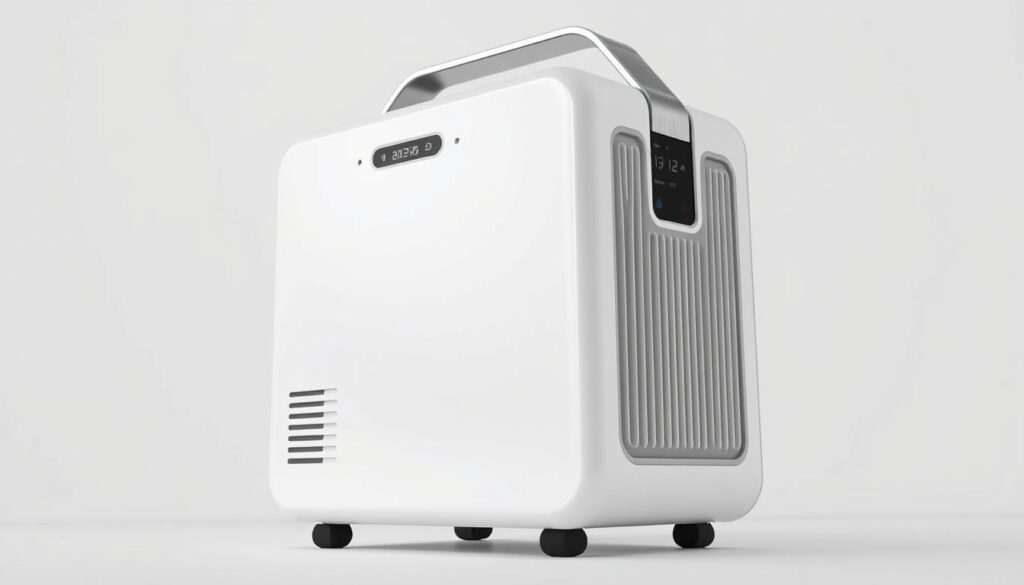
When it comes to choosing a dehumidifier, design and portability are just as important as performance. A well-designed unit not only blends seamlessly with your home decor but also offers ease of use and mobility. Portable dehumidifiers are particularly popular due to their lightweight designs and user-friendly features.
Easy Setup and Mobility Features
Setting up your dehumidifier shouldn’t be a hassle. Modern models often come with ergonomic handles and caster wheels, making it easy to move them from room to room. For instance, the Midea Cube Dehumidifier features a sleek, compact design with a built-in handle and wheels, allowing for effortless relocation. Similarly, the Homelabs Dehumidifier boasts a portable design with a sturdy handle, perfect for moving between the basement and living areas.
Drainage options are another key consideration. Many models offer continuous drainage capabilities, eliminating the need for frequent emptying. The Frigidaire 50-Pint Dehumidifier includes a built-in pump and a long drain hose, providing a convenient option for homeowners. This feature is especially useful in high-moisture areas like basements or laundry rooms.
Customer Reviews and Real-World Testing Insights
Customer feedback and expert testing provide valuable insights into how dehumidifiers perform in real-world conditions. These reviews highlight both the strengths and weaknesses of various models, helping consumers make informed decisions.
Expert Testing Methods
Expert testing involves evaluating dehumidifiers in real-life conditions over several months. For instance, the Frigidaire 50-Pint Dehumidifier was tested in basements and bedrooms, showing consistent moisture removal. Similarly, the GE 35-Pint Dehumidifier was assessed in high-humidity areas, demonstrating reliable performance.
User Reviews and Findings
User reviews reveal practical insights. Many praise the Frigidaire 50-Pint for quiet operation and efficiency. One Amazon review noted, “This dehumidifier has been a game-changer for our basement—quiet and effective!” However, some users reported issues with the GE 35-Pint model, citing reliability concerns after a year of use.
Long-term testing shows that consistent use reveals both pros and cons. The Frigidaire model excels with its automatic shut-off and washable filters, while the GE model struggles with filter maintenance. These findings help consumers understand what to expect.
In summary, expert testing and user reviews together provide a comprehensive view. By considering both, you can choose a dehumidifier that best fits your needs and environment.
How to Choose the Best Dehumidifier for Mold Prevention
Are you struggling to find the perfect dehumidifier to tackle mold issues in your home? Selecting the right model can be tricky, but focusing on key features and your specific needs can make the process much easier. Let’s break down what you should consider to make the best choice for your space.
Matching Features to Home Needs
When shopping for a dehumidifier, think about your home’s unique conditions. Drainage options are a critical feature. Some models come with a built-in pump, which is ideal for homes with high moisture levels, while others use a simple hose for continuous drainage. Consider whether you need a model with a large water tank or if a compact design would better suit your space.
| Drainage Type | Best For | Key Benefit |
|---|---|---|
| Bucket | Small spaces | Easy to empty |
| Hose | Continuous use | Convenient |
| Pump | High moisture areas | Efficient |
Comparing Unit Sizes and Drainage Options
Your room’s size and moisture levels will guide your decision. For example, a small basement might need a model with a 22-pint capacity, while a larger space could require up to 50 pints. Using a dehumidifier with the right capacity ensures efficient moisture removal without wasting energy. Always check the manufacturer’s recommendations to match the unit to your need.
Common problems like frequent emptying or noisy operation can be addressed by choosing a model with features like automatic shut-off or a silent mode. By prioritizing your specific needs, you can find a dehumidifier that effectively prevents mold and enhances your home’s comfort.
Conclusion
FAQ
How does a dehumidifier help prevent mold growth?
A dehumidifier reduces humidity levels in your home, creating an environment where mold cannot thrive. By removing excess moisture from the air, it helps prevent mold growth and keeps your space dry and comfortable.
What is the ideal humidity level to prevent mold?
How do I choose the right dehumidifier size for my room?
Select a dehumidifier based on the room size and moisture level. Check the product’s capacity, measured in pints per day, to ensure it can handle the space effectively. For example, a 50-pint dehumidifier is suitable for large areas like basements or garages.
What features should I look for in a dehumidifier?
How often should I empty the water bucket?
The frequency depends on the humidity level and usage. In highly humid areas, you may need to empty the bucket daily. Consider a model with a built-in pump or continuous drainage option for hassle-free operation.
Can I use a dehumidifier in my bathroom or garage?
Absolutely! Bathrooms and garages often have high humidity levels, making them ideal spaces for a dehumidifier. Portable models are especially convenient for moving between areas as needed.
How do I maintain my dehumidifier for optimal performance?
Regularly clean the filter and empty the water bucket. For models with a pump, ensure the hose is clear of blockages. Proper maintenance ensures your unit runs efficiently and lasts longer.
Are dehumidifiers noisy?
Most modern dehumidifiers are designed to operate quietly. If noise is a concern, look for models with low decibel ratings or features like silent operation modes.
How do I know if I need a dehumidifier?
If you notice signs of excess moisture, such as foggy windows, damp walls, or musty odors, it’s a good idea to use a dehumidifier. It helps address humidity issues before they become a major problem.
Source Links
- Say Goodbye to Sticky Summer Air with the Best Dehumidifiers We Tested – https://www.bhg.com/best-dehumidifiers-6742954
- After Testing 29 Dehumidifiers, These Are the Best for Damp Basements – https://www.thespruce.com/best-dehumidifiers-for-basements-6954927
- Dehumidifier Buying Guide – Consumer Reports – https://www.consumerreports.org/appliances/dehumidifiers/buying-guide/
- How a Whole House Dehumidifier Can Help Prevent Mold – https://www.acguyoftampa.com/blog/indoor-air-quality-service/how-whole-house-dehumidifier-can-help-prevent-mold/
- Top Dehumidifier Frequently Asked Questions, Answered | Danby – https://www.danby.com/blog/top-dehumidifier-frequently-asked-questions-answered/
- The Tested 19 Dehumidifiers, and These Are the Best 7 We Found – https://www.realsimple.com/home-organizing/best-dehumidifiers
- Top Dehumidifiers For Preventing Mold – https://www.mold-answers.com/top-dehumidifiers.html
- Best Dehumidifiers for Your Home – https://www.homedepot.com/c/ab/best-dehumidifiers-for-your-home/9ba683603be9fa5395fab904f0c3e4f
- The Purpose of Dehumidifiers For Mold Control – https://oransi.com/blogs/blog/dehumidifiers-and-mold?srsltid=AfmBOoo1xJLpG8JIPuJCzR0hjUaJCMHSOuoFn8MO6VEheY90pDxLNXAa
- The Battle Against Mold: How Dehumidifiers Can Safeguard Your Home – https://honeywellaircomfort.com/blogs/news/the-battle-against-mold-how-dehumidifiers-can-safeguard-your-home?srsltid=AfmBOor2q6uDjSLl0E7KXEvFK1G97G19FW93r0E20Q7__eSPOOE_kcVp
- Dehumidifiers and Mold Removal: Key Considerations & Tips – https://www.moldguy.ca/dehumidifiers-and-mold-removal/
- The Best Dehumidifiers To Help Keep Mold And Mildew At Bay – https://www.forbes.com/sites/forbes-personal-shopper/article/best-dehumidifiers/
- Best Mold Remediation: Top 5 Powerful Solutions 2024 – https://www.nushoeinspectandcorrect.com/best-mold-remediation/
- How Much Does a Mold Inspection Cost, and Do I Need One? – https://www.homelight.com/blog/buyer-mold-inspection-cost/
- The best dehumidifiers in 2025 – https://www.tomsguide.com/best-picks/best-dehumidifiers
- The Best Dehumidifiers for the Home, Tested – https://www.bobvila.com/articles/best-dehumidifier/
- The Best Dehumidifiers of 2025 – https://www.reviewed.com/home-outdoors/best-right-now/the-best-dehumidifiers
- Dehumidifiers – https://www.energystar.gov/products/dehumidifiers
- Most Energy Efficient Dehumidifiers in 2024: Top Picks for Maximum Savings and Comfort · Greener Wisdom – https://www.greenerwisdom.com/blog/most-energy-efficient-dehumidifiers
- What Size Dehumidifier Do You Need? – Consumer Reports – https://www.consumerreports.org/appliances/dehumidifiers/what-size-dehumidifier-do-i-need-a8767558534/
- We Tested 17 Dehumidifiers, and These 6 Are the Best for Basements – https://www.bhg.com/best-dehumidifiers-for-basements-8384316
- Best Dehumidifiers For Mold Prevention In Every Room – https://moldhelpforyou.com/dehumidifiers-for-mold/
- Best Dehumidifiers for 2025 – https://www.cnet.com/home/kitchen-and-household/best-dehumidifier/
- The Best Dehumidifiers for Basements, Tested and Reviewed – https://www.bobvila.com/articles/best-dehumidifiers-for-basements/
- Essential Dehumidifier Maintenance Tips – https://www.baseaire.com/blogs/news/dehumidifier-maintenance-tips
- Dehumidifier Maintenance | Checklist and Key Tips – https://greenthumbdepot.com/blogs/guides/dehumidifier-maintenance?srsltid=AfmBOor2YMZZeGWsbBnVYuYCB4xHbN0VIAnT_s0urWaZa-LqjSXuOJpi
- Maintaining a Whole-House Dehumidifier | Premier Heating – https://www.premierishere.com/blog/indoor-air-quality-service/maintaining-a-whole-house-dehumidifier-tips-for-optimal-performance-and-service-life/
- I’ve Tested Dehumidifiers for 25 Years: These Are the Most Reliable – https://www.goodhousekeeping.com/appliances/g27192069/best-dehumidifier/
- The Best Dehumidifiers – https://www.nytimes.com/wirecutter/reviews/best-dehumidifier/
- 9 Quietest Dehumidifiers For Your Home [February 2025] – https://humidityfixers.com/dehumidifiers/best-quiet-dehumidifier/
- Hi, You Should Prob Invest in One of These Top-Rated Dehumidifers for Winter – https://www.cosmopolitan.com/lifestyle/g45205750/best-dehumidifer/
- Feeling Damp Indoors? Our Favorite Tested Dehumidifiers Can Fix That – https://www.thespruce.com/best-dehumidifiers-4109621
- GE dehumidifier vs. Frigidaire dehumidifier: Which is better? – https://www.courant.com/2021/07/14/ge-dehumidifier-vs-frigidaire-dehumidifier-which-is-better/
- The best crawl space dehumidifiers, according to experts – https://www.popsci.com/gear/best-crawl-space-dehumidifiers/
- 4 Best Gun Safe Dehumidifiers [Hands-On Tested] – https://www.pewpewtactical.com/best-dehumidifiers-gun-safe/
- Does a Dehumidifier Help with Mold? | The Comfort Authority – https://www.thecomfortauthority.com/dehumidifier-for-mold/
- Best dehumidifier: our top picks to reduce mold and bacteria at home – https://www.homesandgardens.com/buying-guides/best-dehumidifier
- The only dehumidifiers you should consider buying – https://housefresh.com/best-dehumidifiers-we-tested/
- The Battle Against Mold: How Dehumidifiers Can Safeguard Your Home – https://honeywellaircomfort.com/blogs/news/the-battle-against-mold-how-dehumidifiers-can-safeguard-your-home?srsltid=AfmBOopj7xTHoooO6RocFA8DWMbc45Rjk3OCHsOSx0w26TAvjX4dF9Em
- The Best Dehumidifier: Our Top Picks After Testing 50+ Units – https://www.dehumidifierbuyersguide.com/