
Ever walked into a room and hit with a strange, musty smell? It might seem like a small issue, but that smell could mean a big problem in your home. But what does a musty smell really mean, and how can you find out why it’s happening? Let’s uncover the secrets behind musty odors and what they’re trying to tell us.
Key Takeaways
- Musty odors are often a sign of mold or mildew growth due to excess moisture in the home.
- Musty smells are different from strong, pungent moldy odors, but both indicate a potential mold problem.
- Identifying and addressing the source of the musty odor, such as water leaks or poor ventilation, is crucial for eliminating the problem.
- Preventative measures like maintaining proper humidity levels and regular home inspections can help avoid musty odors in the future.
Musty Smells: A Sign of Potential Moisture and Mold Issues
The Difference between Musty and Moldy Odors
Why Musty Odors Shouldn’t Be Ignored
Common Sources of Musty Odors in Homes
Musty odors are common in many homes. Knowing what causes them is the first step to fix them. Issues like water leaks, poor ventilation, and high humidity are common culprits.
Water Leaks and Moisture Intrusion
Water leaks are a major cause of musty odors. Problems with plumbing, roof leaks, and moisture in walls or basements create damp spots. These spots are perfect for mold to grow, releasing a musty smell.
Fixing these water issues is key to getting rid of causes of musty smell in basements and other areas.
Poor Ventilation and High Humidity
Poor ventilation and high humidity also lead to musty smells. Not enough air flow and too much moisture in the air help mold grow. Using dehumidifiers and improving air flow can help remove how to remove musty odor from carpets and other surfaces.
Crawl Spaces: A Haven for Musty Smells
Crawl spaces are often a breeding ground for musty odors in homes. The smell comes from the unique conditions in these hidden areas. Groundwater seepage and mold growth are the main culprits.
Groundwater Seepage and Flooding
Crawl spaces can get wet from groundwater and flooding. This moisture is perfect for mold and mildew to grow. The smell of must in bathrooms and damp areas often points to this issue.
To fix the causes of musty smell in basements, seal off water entry points. Install French drains or sump pumps. Make sure the crawl space has good drainage and air flow.
Mold Growth and Stagnant Water
Stagnant water in crawl spaces also leads to musty odors and mold risk. Mold and mildew love sitting water. This causes a lasting musty odor in bathrooms and other parts of the home.
It’s key to remove standing water and tackle mold growth. This is crucial to get rid of the bad smells.
Pinpointing the Source of Musty Odors
Finding out where musty smells come from is key to getting rid of them. Look for moisture and check your HVAC system. This helps find the real cause of musty smells, which might or might not be mold.
Investigating Potential Moisture Sources
Musty smells usually come from too much moisture. Look for water leaks, high humidity, and condensation. Check bathrooms, basements, crawl spaces, and around windows and doors for damp spots or water.
Inspecting HVAC Systems and Ductwork
Your HVAC system can also cause musty odors if it’s not kept up. Look for mold or water in the ductwork. Make sure your HVAC system moves air well and dries out the air to stop moisture buildup.
| Potential Moisture Sources | HVAC System Inspection |
|---|---|
|
|
By finding the exact source of musty odors, you can fix the problem. This way, you can eliminate musty odors and identify mold early. This keeps your home safe and smelling fresh.
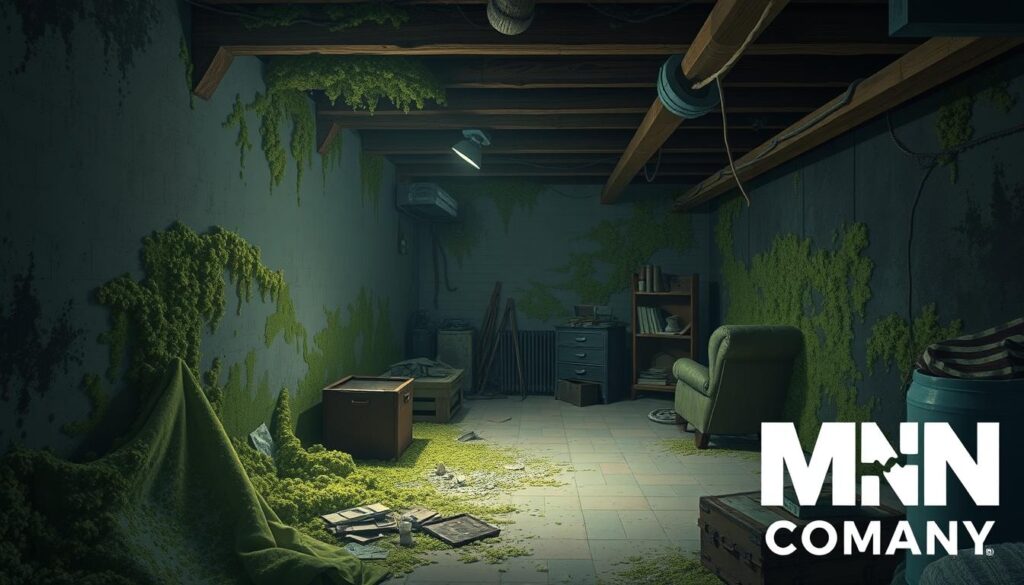
Eliminating Musty Odors from Your Home
To get rid of musty smells in your home, you need to find and fix the problems causing them. This means fixing water leaks, stopping moisture from getting in, and improving air flow. These steps help a lot.
Addressing Water Leaks and Moisture Issues
First, find and fix any water leaks or moisture problems. This could mean fixing leaky pipes or sealing foundation cracks. Also, drying out damp materials like carpets or drywall helps stop mold and mildew.
Improving Ventilation and Air Circulation
Good air flow is key to removing musty smells. You might need a better HVAC system or more exhaust fans. Opening windows and using dehumidifiers also helps keep air fresh.
Preventative Measures for Musty Odor Control
Maintaining Proper Humidity Levels
Regular Home Maintenance and Inspections
Regular checks and upkeep of your home can find and fix moisture problems. Look for water leaks, poor ventilation, or other issues that might cause high humidity or mold. Fixing these problems quickly can help eliminate musty odors from your house and prevent mold after detecting musty smells.
Being proactive and fixing problems fast can reduce musty smells. Regular home maintenance and inspections are essential for a musty-free home.

When to Seek Professional Help
A musty smell in your home might not always mean mold. But, it’s crucial to take it seriously. If you see a lot of mold or damage, get help from experts.
Extensive Mold Growth or Structural Damage
Here are signs you need professional help:
- Widespread or visible mold growth, especially in hard-to-reach areas
- Persistent musty odors that do not improve with basic cleaning or ventilation
- Evidence of water damage or moisture intrusion that may have caused structural issues
For complex or severe musty odor problems, talking to mold remediation experts is best. They can check the situation, find the cause, and fix it. This way, they ensure the problem is solved and won’t come back.
What Does Musty Odor Mean?
Understanding the Implications of Musty Smells
Musty smells usually come from mold or mildew growth. These thrive in damp, poorly aired places. A musty smell means there’s a moisture or humidity issue in your home.
But, a musty smell doesn’t always mean mold. Stagnant air, high humidity, and some building materials can also cause it. Still, any lasting or strong musty smell needs to be checked and fixed quickly.
Knowing what a musty smell means helps homeowners tackle the problem. This ensures a safe, comfortable home for everyone.
Our Mold Inspection and Remediation Services
Free Mold Inspections
We offer free, no-obligation inspections to find the source of the smell. Our team will work with you to understand your home’s unique challenges. Then, we’ll create a plan to get rid of the problem.
Online Mold Assessment Booking
Booking your mold assessment online is easy. Just fill out the form, and we’ll contact you to schedule a visit. We aim to make the process smooth and hassle-free, helping you get your home smelling fresh again.
FAQ
Does a musty smell always mean mold?
Not always, but it often means mold or mildew. Musty smells show fungi are present. If not fixed, this can lead to bigger mold problems.
How can I eliminate musty odors from my house?
First, find and fix the cause, like water leaks or high humidity. Repairing leaks and improving air flow helps. Keeping moisture levels down also helps get rid of musty smells.
What causes a musty smell in basements?
Basements often smell musty because of water leaks or flooding. Poor ventilation also plays a role. These issues create damp places where mold and mildew grow, causing the smell.
Why does my home have a musty smell?
Musty smells usually mean mold or mildew are present. This can happen due to water leaks, high humidity, or poor air flow. These conditions let fungi grow, causing the smell.
How can mold growth be identified from a musty smell?
A musty smell is a clear sign of mold or mildew. But, only a professional can tell how much mold there is. They can assess and suggest how to fix it.
Is a musty odor in the bathroom a sign of mold risk?
How can I remove musty odor from carpets?
For any packaged cleaner or mold-control product, follow the manufacturer's current product label and safety instructions. Product choice does not replace correcting the moisture source or evaluating affected materials.
How can I prevent musty smells after detecting them?
To stop musty smells from coming back, fix the root causes. This means fixing leaks, improving air flow, and controlling humidity. These steps help prevent mold and musty smells.
When should I seek professional help for a musty odor problem?
If you see mold or structural damage with the smell, get professional help. Mold experts have the right tools and knowledge to safely handle and fix complex mold issues.