
Key Takeaways
- Learn when to consider mold testing, including signs of moisture problems and water damage
- Explore the differences between mold inspection and mold testing, and which one is more appropriate for your situation
- Discover the various types of mold tests, including air, surface, and bulk sampling
- Gain insight into the factors that affect the cost of mold tests, such as home size and the extent of mold contamination
With many options, finding the right mold test is key. It should give accurate results without costing too much. Let’s explore mold testing together. We’ll find out which tests are worth your time and money.
What is Mold and Why It’s a Problem
Understanding the Nature of Mold Growth
Mold loves humid places with bad air flow and water damage. It can grow on wood, drywall, carpets, and clothes. Once it starts, it can spread fast, making homes unsafe.
When to Consider Mold Testing
Signs of Moisture Problems and Water Damage
Mold loves damp places. So, spotting moisture issues is key. Look for water stains, musty smells, condensation, and leaks. These signs mean mold might be hiding.
Fixing these problems quickly stops mold from growing. This is crucial to keep your home safe.
Purchasing a New Home or After Renovations
Testing for mold in these situations is smart. It keeps your family safe and saves you from expensive mold removal later.
Mold Inspection vs. Mold Testing
Understanding the difference between mold inspection and testing is key when dealing with mold in your home. Both aim to find and fix mold problems but offer different insights.
A mold inspection is a detailed look by a pro to see where mold is and how much there is. They check for moisture, water damage, and mold. They also find out why the mold is there.
Mold testing takes samples to figure out what kind of mold it is. It tells you how much mold there is and if it’s harmful. This is useful when you’re not sure where the mold came from or how bad it is.
“Mold inspections are generally more cost-effective, but mold testing can provide more detailed information to guide the remediation process.”
Whether to get a mold inspection or test, or both, depends on your situation. Inspections can show you the problem and why it’s there. Testing gives you the facts you need to fix it right.
The difference between mold inspection and testing is in the details. Both are important for solving mold problems and keeping people safe.
The Mold Testing Process
After the visual check, samples are collected for lab tests. There are three main tests: air mold testing, surface mold testing, and bulk mold testing. Each test gives important info to fix the mold issue.
Air Mold Testing
Surface Mold Testing
Surface mold testing looks at mold on surfaces like walls and floors. It finds the mold’s source and the best way to clean it up.
Bulk Mold Testing
Bulk mold testing takes a sample of moldy material, like drywall. The lab analyzes it to find out what mold it is and how much there is.
Factors Affecting the Cost of Mold Tests
The cost of mold testing can change a lot based on several important factors. Knowing these can help homeowners plan and budget for this important step.
Home Size and Accessibility Concerns
The size of your home matters a lot. Bigger homes need more testing, which means higher costs. Also, if mold is in tricky spots like crawl spaces or attics, it’s more expensive to test.
Extent of Mold Contamination and Type of Mold
How much mold there is also plays a big role. If there’s a lot of mold, you’ll need more detailed testing, which costs more. Plus, some mold types need special tests, which can add to the price.
| Factors | Impact on Mold Test Costs |
|---|---|
| Home Size | Larger homes require more extensive testing, increasing costs. |
| Accessibility | Mold in hard-to-reach areas leads to more complex and expensive testing. |
| Extent of Mold Contamination | Widespread mold growth necessitates a more comprehensive testing process, resulting in higher costs. |
| Type of Mold | Certain mold varieties may require specialized testing methods, impacting the overall cost. |
Understanding these factors helps homeowners guess the cost of mold testing better. Talking to a professional mold inspector can give a more precise estimate for your home’s specific situation.
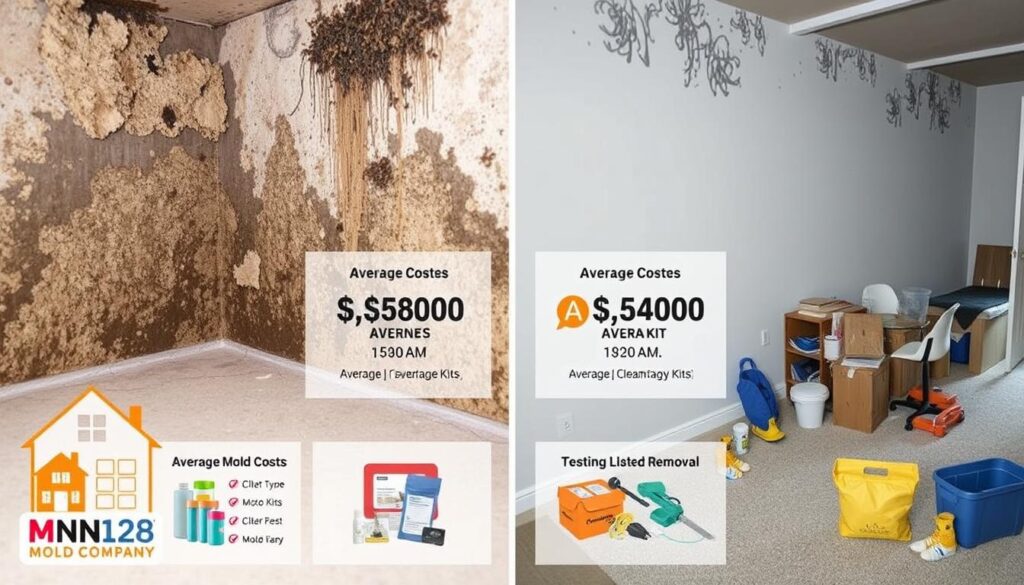
Average Costs of Mold Tests for House
The size of your home is a big factor. Smaller homes cost less, while bigger ones or those with more mold can cost more. The extent of mold and the testing methods also play a role.
Keep in mind, the cost of mold testing can change a lot. Homeowners should think about their needs and budget before deciding on testing.
“The cost of mold testing can be a significant investment, but it’s crucial for identifying and addressing any potential mold issues in your home.”
Knowing the typical costs and what affects them helps homeowners make better choices. This way, they can decide what’s best for their situation.
Choosing a Professional Mold Inspector
When you have mold worries in your home, picking the right mold inspector is key. They help find out how much mold there is and what kind. They also tell you how to fix it. To pick a good mold inspector, look for certain qualifications and certifications.
Qualifications and Certifications to Look For
Professional mold inspectors need to know a lot and have the right skills. Here are important things to check when choosing a mold inspector:
- Experience in mold assessment and remediation: Find inspectors who have solved mold problems before.
- Relevant state or local licenses: Many places need mold inspectors to have special licenses.
- Continuing education and training: Good mold inspectors keep learning and know the latest methods.
Choosing a mold inspector with the right certifications for mold inspectors means you can trust them. They will find the mold problem and fix it right.
Interpreting Mold Test Results
Understanding mold test results is key to fixing mold problems at home. It takes special knowledge to read these tests, but a pro mold inspector can help. They guide you through what the results mean and what to do next.
Mold tests show what kinds of mold are there, how much, and if it’s harmful. Interpreting mold test data helps you see the mold problem clearly. This way, you can plan how to fix it and keep your home safe.
A mold inspector can explain what mold test results mean to you. They tell you what mold you have, how bad it is, and if it’s risky. Knowing this helps you decide how to clean up the mold.
| Aspergillus | 1,500 spores/m³ | Moderate |
| Stachybotrys | 500 spores/m³ | High |
| Cladosporium | 800 spores/m³ | Low |
Working with a skilled mold inspector ensures you get the right solution for your mold problem. They help you understand and act on the test results effectively.
mold tests for house
Mold testing is key when dealing with mold in your home. You can pick between professional services or DIY kits. Knowing the differences helps you choose wisely based on your budget and needs.
Professional Mold Testing Services
Professional services give a detailed look at mold in your home. They use special methods like air sampling and surface tests. This helps you plan how to fix the mold problem.
Though it costs more, the accuracy and expertise are worth it. They’re crucial for tackling tough mold issues.
DIY Mold Test Kits
DIY kits are a cheaper way to check for mold. They involve taking samples and sending them to a lab. They’re a good starting point but might not be as detailed as professional tests.
It’s vital to follow the kit’s instructions and understand the results. This ensures you get accurate information about mold in your home.
Choosing between professional services and DIY kits depends on your home’s size, the mold problem, and your budget. Your specific situation will guide your decision.
| Feature | Professional Mold Testing | DIY Mold Test Kits |
|---|---|---|
| Accuracy | High | Moderate |
| Expertise | Experienced inspectors | Homeowner interpretation |
| Cost | Higher | Lower |
| Comprehensive Analysis | Yes | Limited |

DIY Mold Test Kits: Pros and Cons
In recent years, DIY mold test kits have become popular among homeowners. They are seen as a convenient and affordable way to check for mold. However, it’s important to know their limitations before deciding if they’re right for you.
Pros of DIY Mold Test Kits
- Affordability: DIY mold test kits are cheaper than professional services, making them a good choice for those on a budget.
- Convenience: You can test for mold yourself, anytime you want, without needing to schedule an appointment.
- Faster results: These kits usually give you results quicker than sending samples to a lab.
Cons of DIY Mold Test Kits
- Limited accuracy: DIY kits might not be as accurate as professional tests, which use more advanced equipment.
- Scope of assessment: These kits mainly check for airborne mold spores and might miss hidden mold or moisture issues.
- Interpretation of results: It can be hard to understand what your DIY test results mean, making it tough to know what to do next.
| Pros of DIY Mold Test Kits | Cons of DIY Mold Test Kits |
|---|---|
| Affordability | Limited accuracy |
| Convenience | Scope of assessment |
| Faster results | Interpretation of results |
Next Steps After Mold Testing
After mold testing in your home, it’s time to make a detailed remediation plan. This plan should tackle the moisture problem causing mold and figure out the mold’s extent and type. Getting help from mold remediation experts is key to removing mold and stopping it from coming back.
Developing a Remediation Plan
- Moisture Control: Find and fix the moisture problem, like leaks or bad ventilation.
- Mold Removal: Choose the best way to safely remove the mold, based on its type and spread.
- Preventive Measures: Take steps to stop mold from growing again, like better airflow or using mold-resistant materials.
“The key to successful mold remediation is addressing the root cause of the problem, not just the visible mold itself.”
Collaborating with a skilled mold remediation expert ensures your next steps after mold testing are right for your situation. This leads to lasting results.
| Mold Remediation Considerations | Description |
|---|---|
| Moisture Control | Identifying and resolving the underlying moisture issue that’s fueling mold growth |
| Mold Removal | Determining the appropriate methods for safely and effectively removing the mold |
| Preventive Measures | Implementing strategies to discourage future mold growth, such as improving airflow or installing a dehumidifier |
Conclusion
Professional testing gives you detailed and accurate results. DIY kits are quicker and cheaper. But, they might not be as thorough.
It’s important to find and fix mold problems fast. This protects your home and keeps your family safe. When you’re deciding on conclusion on mold testing for homes, think about the key takeaways on mold testing options. This will help you make the best choice for your home.
FAQ
What is mold and why is it a problem?
When should homeowners consider mold testing?
Homeowners should think about mold testing if they see water damage or mold. It’s also a good idea after buying a new home or after renovations. Spotting moisture problems is key to knowing if mold testing is needed.
What is the difference between mold inspection and mold testing?
Mold inspection is a visual check to see if mold is present. Mold testing involves taking samples to find out what kind of mold it is. Inspections are cheaper but testing gives more detailed information for fixing the problem.
What are the typical methods of mold testing?
Mold testing starts with a visual check for mold. Then, samples are taken for lab analysis. These can be air, surface, or bulk samples. Each method checks for different things.
What factors affect the cost of mold testing?
The cost of mold testing depends on the home’s size, how easy it is to get to, and how much mold there is. Bigger homes and harder-to-reach mold cost more to test.
What is the average cost of a mold test for a house?
Mold tests for houses usually cost between 0 and
FAQ
What is mold and why is it a problem?
When should homeowners consider mold testing?
Homeowners should think about mold testing if they see water damage or mold. It’s also a good idea after buying a new home or after renovations. Spotting moisture problems is key to knowing if mold testing is needed.
What is the difference between mold inspection and mold testing?
Mold inspection is a visual check to see if mold is present. Mold testing involves taking samples to find out what kind of mold it is. Inspections are cheaper but testing gives more detailed information for fixing the problem.
What are the typical methods of mold testing?
Mold testing starts with a visual check for mold. Then, samples are taken for lab analysis. These can be air, surface, or bulk samples. Each method checks for different things.
What factors affect the cost of mold testing?
The cost of mold testing depends on the home’s size, how easy it is to get to, and how much mold there is. Bigger homes and harder-to-reach mold cost more to test.
What is the average cost of a mold test for a house?
What qualifications should homeowners look for in a professional mold inspector?
How can homeowners interpret mold test results?
Understanding mold test results needs special knowledge. Professionals can explain what the results mean and what to do next. Homeowners should work with their inspector to get the most out of the results.
What are the advantages and disadvantages of DIY mold test kits?
DIY mold test kits are easy to use and cheap. But, they might not be as accurate as professional tests. They only check for airborne spores and don’t find hidden mold. Homeowners should think carefully before using a DIY kit.
What are the next steps after mold testing?
,100. The average is 0 to 0. Costs vary based on the home’s size, mold amount, and testing methods.
What qualifications should homeowners look for in a professional mold inspector?
How can homeowners interpret mold test results?
Understanding mold test results needs special knowledge. Professionals can explain what the results mean and what to do next. Homeowners should work with their inspector to get the most out of the results.
What are the advantages and disadvantages of DIY mold test kits?
DIY mold test kits are easy to use and cheap. But, they might not be as accurate as professional tests. They only check for airborne spores and don’t find hidden mold. Homeowners should think carefully before using a DIY kit.
What are the next steps after mold testing?
Source Links
- Mold Inspection 101: How Much It Costs and When to Get One
- How Much Does Mold Inspection Cost In 2024?
- Mold Test Kit vs. Professional Mold Testing