
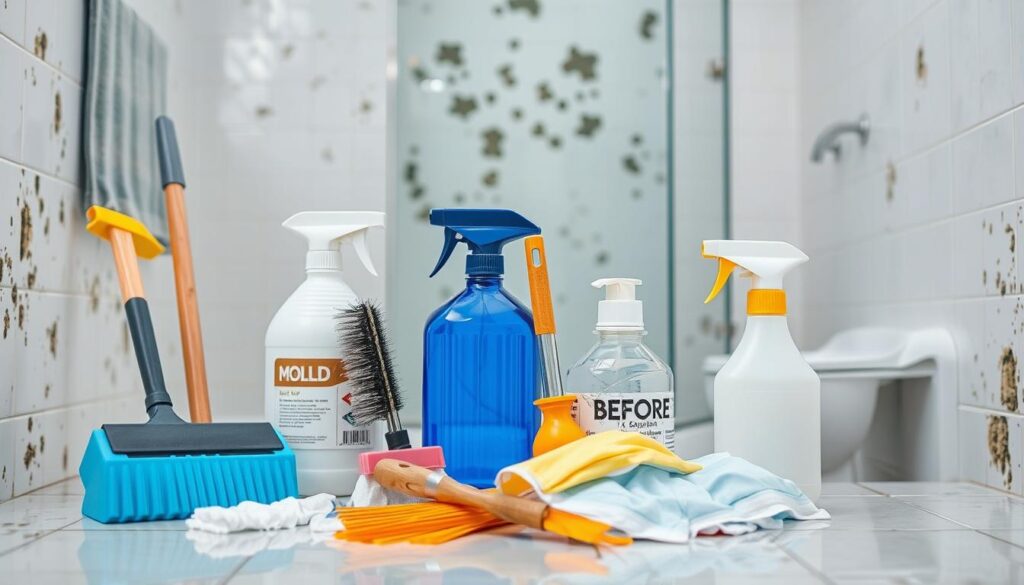
Appearance alone cannot reliably determine mold species.
For any packaged cleaner or mold-control product, follow the manufacturer's current product label and safety instructions. Product choice does not replace correcting the moisture source or evaluating affected materials.
Key Takeaways
- Regular cleaning and maintaining a dry, well-ventilated home can help prevent mold growth in the first place
- Larger mold infestations may require professional intervention for safe and thorough remediation
Mold is everywhere, with spores floating in the air, even in our homes. These tiny fungi grow in damp places, eating organic stuff like wood and paper. Keeping moisture levels right is key, as leaks or high humidity can lead to mold growth.
Common Types of Indoor Mold
Signs of Mold Infestation
Look out for mold, musty smells, water stains, and condensation. If mold covers porous stuff like drywall or carpet, it’s best to throw it away. It can’t be cleaned well.
Essential Safety Equipment for Mold Removal
- Rubber gloves: Use disposable gloves made of nitrile or latex to protect your hands from mold.
- Goggles: Safety goggles will shield your eyes from mold debris and splashes.
- Rubber boots: Waterproof boots will keep your feet dry and prevent mold spore spread.
- Protective clothing: Wear disposable coveralls or a protective suit to cover your body and avoid cross-contamination.
You’ll also need other items for a successful mold removal project:
- Plastic sheets (4mm thick) for containment and isolation of the affected area
- Paper towels for wiping and cleaning
- A HEPA (High-Efficiency Particulate Air) vacuum cleaner to capture and contain mold spores
It’s vital to dispose of used protective gear and take decontamination measures to prevent mold spore spread. By using the right mold removal safety gear and protective equipment for mold cleaning, you can safely remove mold from your home or workplace.
Creating the Right Solution Strength
Storage and Handling Guidelines
“Chlorine bleach, or sodium hypochlorite, does not penetrate porous materials like wood or drywall, so it’s not the best choice for treating mold on these surfaces.”
Pre-Treatment Surface Assessment and Preparation
First, check how much mold there is. Look closely at the surfaces for any mold signs, especially in damp or moist areas. This helps you know the best cleaning method and tools needed.
- Make sure the area is well-ventilated by opening windows or using fans.
- Use plastic sheeting to cover nearby surfaces to stop mold spores from spreading.
- Test the solution on a small, hidden area first to avoid damage or color changes.
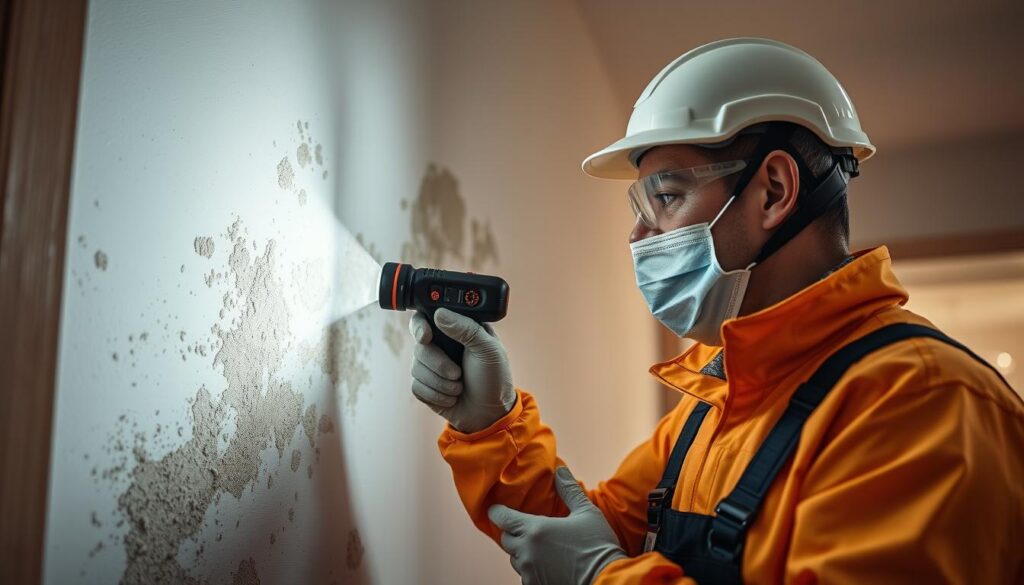
“Mold is generally not necessary. If visible and smell are detected, then it is established to have a mold problem.”
| Mold Removal Checklist | Importance |
|---|---|
| Assess Mold Growth | Determine the appropriate cleaning approach |
| Ensure Proper Ventilation | Prevent the spread of mold spores |
| Protect Surrounding Surfaces | Contain the mold during cleaning |
| Pre-Wet Surfaces | Improve the effectiveness of the bleach-and-water solution |
| Test Solution on Small Area | Ensure no discoloration or damage to the surface |
Step-by-Step Mold Cleaning Process
Surface Application Techniques
Scrubbing Methods
- For hard surfaces like tiles or countertops, use a stiff-bristled brush. This helps remove mold.
- On soft materials like wood or drywall, use a gentle scrubber. This avoids damage.
- Don’t forget to clean crevices and corners where mold likes to hide.
Rinsing Procedures
By following these steps, you can get rid of mold and keep it away. Always wear protective gear and get help for big mold jobs.
Limitations of Bleach in Mold Treatment
| Bleach Effectiveness on Mold | Alternatives to Bleach |
|---|
For serious mold problems, experts like PuroClean are best. They use special treatments to get rid of mold for good.
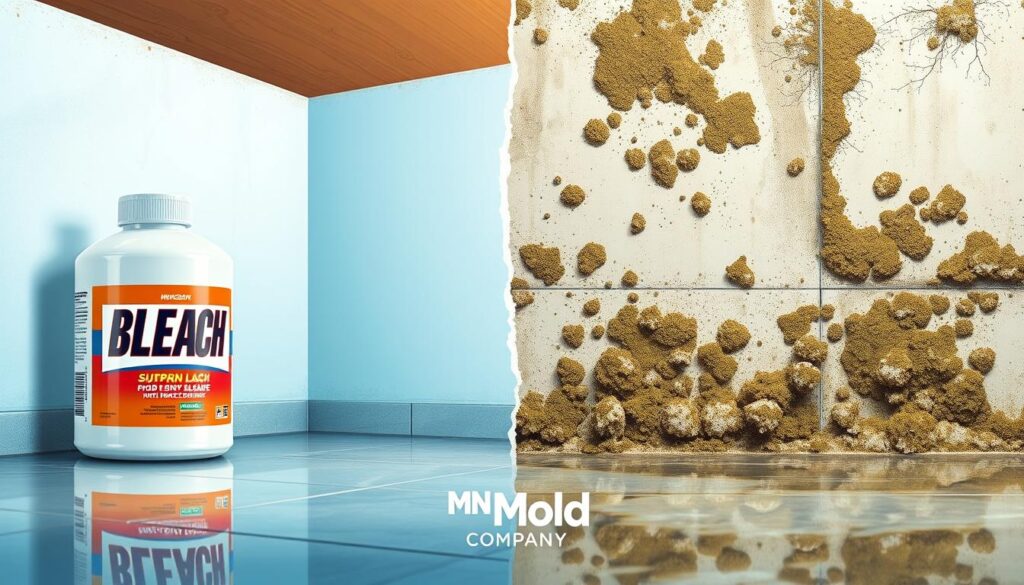
“Bleach only treats the surface mold, leaving the roots untouched. It’s crucial to address the source of the problem for lasting mold control.”
Post-Cleaning Ventilation and Drying
Air Flow Management
Good air circulation is important for drying surfaces completely. Use fans to move air and help dry out any leftover moisture. Place fans to create a cross-breeze, moving air from one side of the room to the other.
This helps dry things faster and stops mold from growing in still air.
Humidity Control Methods
Also, fix any moisture sources like leaks or humid spots. Check treated areas often for mold signs and act fast if you see any.
Professional Mold Services and When to Call Experts
For mold bigger than 10 square feet, or if it keeps coming back, you might need a mold expert. These specialists can do detailed checks, create a plan to get rid of mold, and tackle tough surfaces.
FAQ
What safety precautions should I take when using bleach solutions?
What surfaces are suitable for bleach mold removal?
What is the step-by-step process for bleach mold treatment?
What are the limitations of bleach in killing mold spores?
How do I dispose of bleach solutions after use?
What are alternatives to bleach for mold remediation?
How does bleach affect indoor air quality?
How can I prevent mold return after using bleach?
What protective equipment is needed when using bleach?
Source Links
- How to Clean Mold & Mildew Outside With Bleach | Clorox® – https://www.clorox.com/learn/how-to-clean-mold-mildew-outside-bleach/
- How to Get Rid of Mold – https://www.homedepot.com/c/ah/how-to-get-rid-of-mold/9ba683603be9fa5395fab907c52351c
- Mold Remediation Equipment Professionals Use to Kill Mold – https://gocodes.com/mold-remediation-tools-equipment/?srsltid=AfmBOorNVLwBwZLyzh3sTmFr0Sttpu4CogSG_jtEEubtwUEtafTmGr7h
- 9 Must Have Protective Gear/Equipments For Mold Removal – https://www.ultimatemoldcrew.ca/protective-gear-equipment-for-mold-removal/
- How to Safely Remove Mold | Reynolds Restoration Services – https://reynoldsrestoration.com/knowledge-center/how-to-remove-mold/
- Bleach to Water Ratio for Mold – Terry’s Cleaning & Restoration – https://terryscarpetcleaning.com/2023/09/16/bleach-to-water-ratio-for-mold/
- Chlorine Bleach and Mold Clean Up – https://www.painttalk.com/threads/chlorine-bleach-and-mold-clean-up.6338/
- Cleaning Mold In Your Home – https://www.dhs.wisconsin.gov/mold/clean.htm
- Steps for Cleaning Mold – https://www.michigan.gov/-/media/Project/Websites/mdhhs/Folder2/Folder12/Folder1/Folder112/STEPS_FOR_CLEANING_MOLD_MDCH.pdf?rev=5a509f3a03304b959e26a763b293cb5b
- How to Kill Mold (with Pictures) – wikiHow – https://www.wikihow.com/Kill-Mold
- The Ultimate Guide on How To Clean and Get Rid Of Mold – https://prohousekeepers.com/blog/ultimate-mold-cleaning-guide/
- DIY Mold Removal vs. Professional: Which Is Better? | Pur360 – https://pur360solutions.com/diy-mold-removal-vs-professional-which-is-better/
- When to Call a Professional About Mold – Modernistic® – https://www.modernistic.com/restoration/mold-remediation/when-to-call-a-professional-about-mold/