
Appearance alone cannot reliably determine mold species.
Key Takeaways
- Understand the visual differences between mold and mildew to accurately identify the problem.
- Learn how to spot mold growth on ceilings, walls, and even behind wallpaper in your home.
- Discover the telltale signs of mold in the kitchen, bathroom, basement, and other high-risk areas.
- Develop a room-by-room inspection routine to catch mold infestations early.
The Dangers of Mold in Your Home
Hidden Mold and Its Costly Consequences
Hidden mold issues are especially tricky because you can’t see them. They can spread all over your home without you knowing. This can lead to big mold damage costs if you don’t fix it. You might need to clean up a lot, repair your home, or even replace damaged parts.
Preparing for a Mold Inspection
Before you schedule a mold inspection, it’s important to gather some key information. Keep records of any past mold issues, leaks, or repairs. This info helps the inspector understand the situation better.
Gather Relevant Information
Start by collecting the following details:
- Any previous mold inspections or remediation efforts
- Details on any water leaks, floods, or moisture problems in your home
- Records of any repairs or renovations related to mold or moisture
- Dates and descriptions of any visible mold growth you’ve noticed
By gathering the right information and choosing a qualified inspector, you’ll get a thorough assessment. This is the first step towards fixing any mold issues in your home.
The Mold Inspection Process
Identifying and addressing mold in your home starts with a mold inspection. This step involves several important parts. Each part helps understand the mold situation and its effects.
Visual Examination
The first step is a visual check of your home. Inspectors look for mold signs like discoloration or growth. They focus on areas with moisture, where mold often grows.
Moisture Assessment
Finding hidden moisture is key in the mold inspection process. Inspectors use tools like moisture meters to find high humidity or water damage. This helps find the mold’s source.
Air Sampling and Lab Testing
Sometimes, air sampling for mold is needed. Inspectors collect samples for lab analysis. This shows the types of mold present, helping plan the best fix.
By combining visual checks, moisture tests, and air sampling, the mold inspection gives a full picture. This info is vital for fixing the mold problem effectively.
Room-by-Room Mold Inspection Checklist
It’s important to check your home for mold in every room. This checklist will help you find mold in kitchens, bathrooms, bedrooms, basements, and attics.
Kitchen
Look closely at the sink, faucets, fridge, and cabinets in the kitchen. Check for leaks or water damage, as mold loves these conditions. Check under the sink and near the dishwasher for moisture or mold.
Bathroom
Bathrooms are often wet, making them a mold hotspot. Check the shower, bathtub, sink, and toilet for mold, stains, or too much humidity. Also, inspect behind the toilet and under the sink.
Bedrooms
Bedrooms can also have mold, especially if there’s poor ventilation or water damage. Look for mold on walls, ceilings, and around windows. Any fuzzy spots or discoloration could be mold.
Basement
Basements are common places for mold because they’re often damp. Inspect walls, floors, and surfaces for mold. Watch for mold near windows, doors, and any leaks or cracks.
Attic
Attics can also have mold if there’s bad ventilation or roof leaks. Check the roof, walls, and insulation for mold or moisture. This can help prevent mold growth.
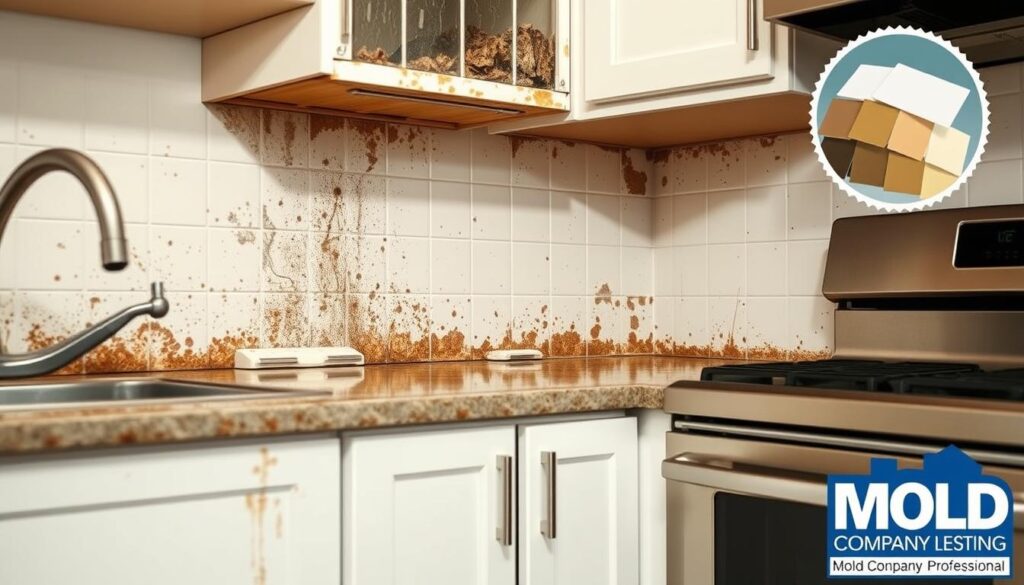
what are visual signs of mold?
Mold can be a serious problem in any home. It’s important to know what to look for to identify it early. Mold comes in many colors, shapes, and textures. Knowing the visual signs of mold and the types of mold growth is key.
One common sign of mold is discoloration on walls, floors, or ceilings. It can be gray, black, green, white, pink, blue, red, purple, or brown. The texture can be fuzzy or powdery, velvety, or slimy.
- Fuzzy or powdery mold is often mildew, which is flat and gray or white.
Mold can also show up in less obvious ways. You might smell a musty odor or see discoloration on fabrics or surfaces. These signs shouldn’t be ignored. They can mean there’s a big mold problem in your home.
| Mold Color | Mold Texture |
|---|---|
| Gray, black, green | Fuzzy, powdery, velvety, slimy |
| White, pink, blue, red, purple, brown | Fuzzy, powdery, velvety, slimy |
By knowing the visual signs of mold and the types of mold growth, homeowners can spot and fix mold problems early. This helps avoid bigger issues later on.
Mold Hotspots in Your Home
Mold can grow in hidden spots like behind walls, under floors, and in basements and crawl spaces. These areas often have moisture problems and are hard to see. This makes them perfect for hidden mold in walls, mold under floors, and mold in basements and crawl spaces.
Behind Walls
Under Flooring
Mold also likes to grow under floors, especially where moisture builds up. This could be due to leaks, bad ventilation, or high humidity. If you lift carpets or floorboards, you might find mold under floors. It’s important to deal with it quickly.
Basements and Crawl Spaces
Basements and crawl spaces are especially at risk for mold in basements and crawl spaces. They’re often damp, dark, and don’t get enough air. If mold grows here, it can spread to other parts of your home.
Understanding the Mold Inspection Report
After the mold inspection, the inspector gives a detailed report. This report is key for homeowners and professionals to understand the mold findings. It helps you take steps to fix any problems and keep your home and family safe.
The mold inspection report usually has important details:
- Areas of Concern: It shows where mold was found in your home. This gives a clear view of the problem’s size.
- Moisture Levels: It measures moisture in different parts of your home. Moisture is key for mold growth.
- Types of Mold: It tells you what kind of mold is there. Not all molds are dangerous. Knowing the type helps decide how to fix it.
- Remediation Recommendations: If mold is found, it suggests how to safely remove it. It also talks about fixing the moisture problem.
“Addressing mold issues requires a comprehensive understanding of the mold inspection report. This document is the key to unlocking the necessary steps for effective mold remediation and prevention.”
Preventing Mold Growth
Mold can be a big problem in homes, but you can fight it. The secret is to control humidity, keep your home in good shape, and ensure good air flow. Also, watch your landscaping.
Control Indoor Humidity
One top way to stop mold is to manage humidity inside. Get a good dehumidifier, especially in wet spots like bathrooms and basements. This keeps the air dry, making it hard for mold to grow.
Maintain Your Home
Keeping your home in check is key to stopping mold. Fix leaks and water damage fast. Also, clean gutters and downspouts to keep water away from your home’s base. Watch for any signs of moisture.
Proper Ventilation
Good air flow in your home helps control humidity and stops mold. Make sure bathrooms, kitchens, and other wet areas have working exhaust fans or open windows. This helps air move around.
Landscaping Tips
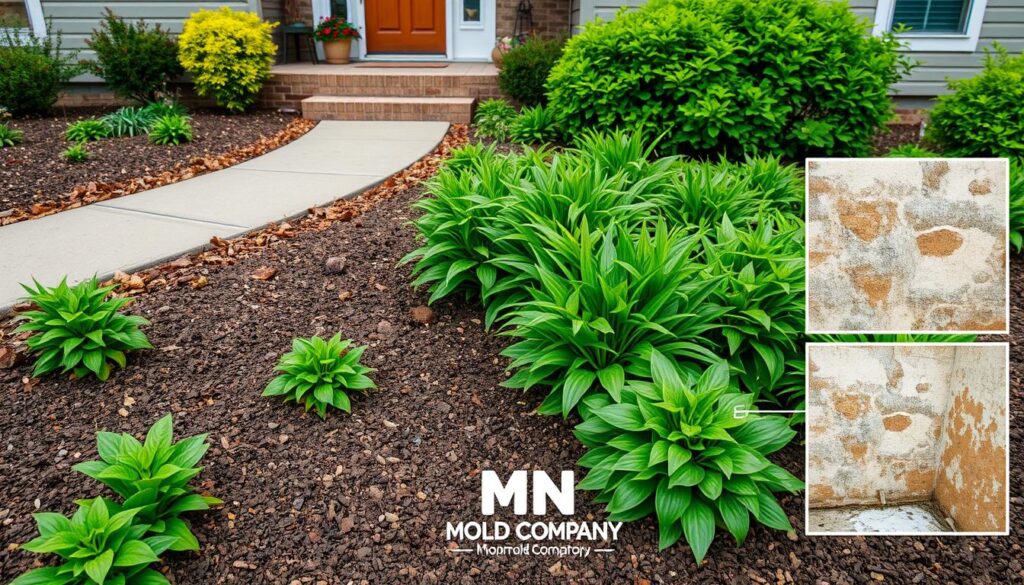
- Make the soil around your home slope away from it. This lets water drain off.
- Trim trees and shrubs so they don’t touch your home. This keeps air moving and stops moisture from getting trapped.
- Keep plants far from your home’s siding. This helps air flow and prevents water damage.
DIY vs. Professional Mold Inspections
When it comes to finding mold in your home, you have two choices: DIY or professional inspections. DIY checks can spot visible mold but might miss hidden problems. These could be behind walls or under floors.
A DIY check is good for routine checks. But for a full assessment, a professional mold inspection is better. Professional mold inspectors use special tools to find hidden mold and moisture issues that DIY checks might miss.
Choosing between DIY and professional mold inspections depends on your home’s needs and your skills. For a detailed check and peace of mind, a professional mold inspection is usually the best choice.
“For a thorough assessment and peace of mind, a professional mold inspection is often the best option.”
Conclusion
FAQ
What are the most common visual signs of mold in the home?
Where are mold hotspots typically found in a home?
Mold often hides in spots like behind walls and under floors. Basements and crawl spaces are also common places. These areas are often damp and hard to see.
How can I prepare for a professional mold inspection?
Start by collecting info about your home’s past, like any mold, leaks, or repairs. Keep records of mold inspections, clean-ups, or fixes. This helps the inspector understand your situation better.
What happens during a mold inspection?
First, the inspector looks for mold with their eyes. They check areas that are damp or have water damage. They might use special tools like moisture meters and cameras.
In some cases, they might take air samples to check for mold spores.
How can I prevent mold growth in my home?
Keep your home dry by controlling humidity and fixing leaks fast. Make sure it’s well-ventilated. Keeping your home in good shape is also important.
Also, make sure water doesn’t collect near your home’s foundation. Good landscaping can help keep water away.
Should I conduct a DIY mold inspection or hire a professional?
DIY checks can spot obvious mold, but they might miss hidden problems. For a full check, it’s best to get a professional. They have the skills and tools to find hidden mold and moisture issues.